
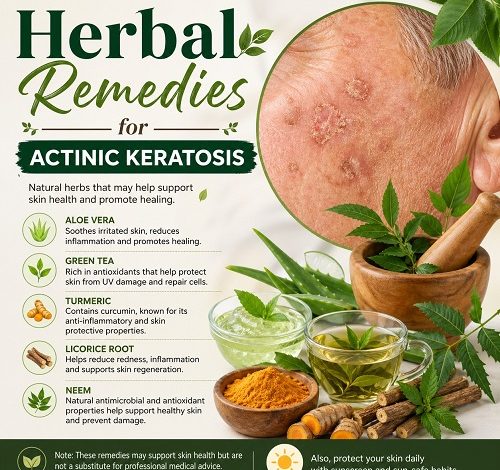
Actinic keratosis is a common skin condition that develops after years of sun exposure. It often appears as rough, scaly, dry, or crusty patches on areas such as the face, scalp, ears, neck, hands, and arms. These patches may seem harmless at first, but they should never be ignored because some can develop into skin cancer if left untreated. Many people look for supportive natural care options alongside professional treatment. That is why interest in Herbal Remedies for Actinic Keratosis continues to grow.
While medical diagnosis and treatment remain essential, certain herbs, plant-based ingredients, and healthy lifestyle habits may help soothe irritated skin, support healing, and improve skin resilience. Evidence-informed options, practical skin care steps, and safe ways to use Natural Remedies for Actinic Keratosis.
What Is Actinic Keratosis?
Actinic keratosis (AK) is caused mainly by long-term ultraviolet (UV) radiation damage from the sun or tanning beds. It usually affects fair-skinned individuals, older adults, and those who spend a lot of time outdoors. However, anyone can develop it.
Common signs include:
- Rough, sandpaper-like patches
- Red, pink, brown, or skin-coloured spots
- Dry or crusty skin lesions
- Mild itching, burning, or tenderness
- Persistent flaky areas that do not heal
Because AK can sometimes progress into squamous cell carcinoma, a dermatologist should assess suspicious skin changes.
Why People Use Herbal Remedies for Actinic Keratosis
Many people seek herbal support for several reasons:
- To soothe dry, irritated skin
- To support the skin barrier
- To reduce redness and discomfort
- To promote healthy skin repair
- To complement medical care under guidance
- To improve overall skin wellness naturally
It is important to understand that herbs are not a guaranteed cure for actinic keratosis. They may serve as supportive care, not a replacement for professional treatment.
Best Herbal Remedies for Actinic Keratosis
1. Aloe Vera
Aloe vera is one of the most trusted natural skin remedies. Its cooling gel contains compounds that may calm irritation and hydrate damaged skin.
Benefits:
- Soothes redness and burning
- Moisturises dry, flaky patches
- Supports skin healing
- May reduce inflammation
How to Use:
Apply pure aloe vera gel to the affected area once or twice daily. Use a high-quality product free from fragrance or alcohol.
2. Green Tea Extract
Green tea is rich in polyphenols, especially EGCG, which has antioxidant properties. These compounds may help protect skin from oxidative stress caused by UV damage.
Benefits:
- Supports skin defence against free radicals
- May calm inflamed skin
- Encourages healthier skin appearance
How to Use:
Drink green tea regularly or use creams containing green tea extract.
3. Calendula
Calendula is a traditional herb known for skin soothing effects. It is often used in balms, creams, and ointments for dry or irritated skin.
Benefits:
- Helps calm sensitive skin
- Supports wound healing
- Reduces discomfort and redness
How to Use:
Apply calendula cream to surrounding irritated skin, unless advised otherwise by your doctor.
4. Turmeric
Turmeric contains curcumin, a natural compound with anti-inflammatory and antioxidant properties.
Benefits:
- Supports healthy inflammatory response
- Helps fight oxidative stress
- May promote healthier skin repair
How to Use:
Use turmeric in cooking, teas, or supplements after consulting a healthcare provider.
5. Chamomile
Chamomile is well known for calming skin and reducing irritation.
Benefits:
- Gentle on sensitive skin
- Helps ease itching
- Supports skin comfort
How to Use:
Use chamomile-infused creams or cooled chamomile tea compresses.
6. Witch Hazel
Witch hazel is a natural astringent that may help calm inflamed skin and reduce excess oil.
Benefits:
- Helps tone skin
- Reduces mild irritation
- Refreshes sun-exposed skin
How to Use:
Apply alcohol-free witch hazel gently with cotton.
7. Coconut Oil
Virgin coconut oil provides moisture and may support the skin barrier.
Benefits:
- Deep hydration
- Helps reduce dryness
- Supports protective barrier function
How to Use:
Apply a small amount to dry surrounding skin, avoiding irritated open lesions.
8. Milk Thistle
Milk thistle contains silymarin, an antioxidant compound studied for skin protective effects.
Benefits:
- Supports liver health
- May help skin recovery from oxidative stress
- Provides antioxidant support
How to Use:
Take supplements only after medical advice.
Natural Remedies for Actinic Keratosis Through Diet
What you eat can influence skin health. A nutrient-rich diet may support repair and resilience.
Foods to Include:
- Colourful berries
- Leafy greens
- Tomatoes
- Carrots
- Nuts and seeds
- Olive oil
- Fatty fish
- Green tea
Helpful Nutrients:
- Vitamin C
- Vitamin E
- Zinc
- Omega-3 fatty acids
- Beta-carotene
- Selenium
These nutrients may support collagen production and antioxidant defence.
Lifestyle Changes That Support Skin Healing
Sun Protection Is Essential
No herbal plan can succeed without protecting the skin from further UV damage.
Daily Steps:
- Wear broad-spectrum sunscreen SPF 30+
- Use hats and protective clothing
- Avoid peak sun hours
- Seek shade outdoors
- Avoid tanning beds
Keep Skin Moisturised
Dry, damaged skin becomes more irritated. Use gentle fragrance-free moisturisers.
Avoid Harsh Products
Avoid scrubs, strong acids, and irritating cosmetics on affected areas.
Manage Stress
Chronic stress may affect skin healing. Try:
- Walking
- Meditation
- Deep breathing
- Good sleep habits
Medical Treatments for Actinic Keratosis
Although Herbal Remedies for Actinic Keratosis may support comfort, medical treatment is often recommended.
Common treatments include:
- Cryotherapy (freezing lesions)
- Prescription creams
- Chemical peels
- Curettage
- Laser therapy
- Photodynamic therapy
Your dermatologist chooses treatment based on lesion size, number, and location.
Can Herbal Remedies Remove Actinic Keratosis?
Herbal remedies may help support healthier skin, reduce dryness, and calm irritation. However, they should not be relied upon to remove suspicious lesions or replace dermatology care.
Any persistent rough patch should be examined professionally.
Safe Use of Herbal Remedies
Before using herbs on damaged skin, follow these safety rules:
- Patch test first
- Avoid applying to bleeding or infected areas
- Use only reputable products
- Stop use if burning occurs
- Speak with a doctor before supplements
- Continue medical check-ups
Sample Daily Routine for Healthy Skin Support
Morning
- Gentle cleanser
- Aloe vera or moisturiser
- Sunscreen SPF 30+
- Antioxidant-rich breakfast
Afternoon
- Reapply sunscreen
- Drink water
- Wear hat outdoors
Evening
- Cleanse skin gently
- Calendula or moisturiser
- Herbal tea such as chamomile
Who Is Most at Risk of Actinic Keratosis?
You may have higher risk if you:
- Spend years in the sun
- Have fair skin
- Burn easily
- Are over 40
- Have many freckles
- Have weakened immunity
- Use tanning beds
These individuals should perform regular skin checks.
Warning Signs to See a Doctor Quickly
Seek medical advice if a patch:
- Bleeds easily
- Grows quickly
- Becomes painful
- Changes colour
- Ulcerates
- Does not heal
- Feels thick or hard
These changes need prompt evaluation.
Frequently Asked Questions
Are Herbal Remedies for Actinic Keratosis effective?
They may support comfort, hydration, and skin health, but they do not replace professional treatment.
What is the best natural option?
Aloe vera, green tea, calendula, and sun protection are commonly used supportive choices.
Can diet help?
Yes. A nutrient-rich anti-inflammatory diet may support healthier skin.
Can AK go away naturally?
Some lesions may fade, but many persist or worsen. Medical review is important.
Final Thoughts
Using Herbal Remedies for Actinic Keratosis can be a helpful way to support skin comfort and overall wellness when combined with professional care. Natural options such as aloe vera, green tea, calendula, turmeric, and healthy nutrition may soothe damaged skin and improve resilience. However, actinic keratosis is more than a cosmetic issue. Because it can develop into skin cancer, proper diagnosis and monitoring are essential.
The smartest approach combines dermatologist-guided treatment, strong sun protection, and carefully chosen Natural Remedies for Actinic Keratosis. By acting early and caring for your skin consistently, you can support healthier skin for the future.