
Cervical spondylosis is a common degenerative condition affecting the neck, often caused by aging, poor posture, and prolonged screen time. Characterized by stiffness, pain, reduced mobility, and nerve-related symptoms, this condition can significantly impact quality of life. Fortunately, Herbal Remedies for Cervical Spondylosis offer a natural, holistic approach to managing symptoms and improving overall spinal health. The most effective Natural Remedies for Cervical Spondylosis, focusing on proven herbal solutions, lifestyle strategies, and preventive care to support long-term relief.
What is Cervical Spondylosis?
Cervical spondylosis refers to the wear and tear of the cervical spine (neck region), including discs, joints, and bones. Over time, degeneration leads to inflammation, nerve compression, and reduced flexibility.
Common Symptoms:
- Chronic neck pain and stiffness
- Headaches originating from the neck
- Shoulder and arm pain
- Tingling or numbness in hands
- Reduced range of motion
- Muscle weakness
Why Choose Herbal Remedies for Cervical Spondylosis?
Conventional treatments often rely on painkillers, muscle relaxants, or surgery in severe cases. However, Herbal Remedies provide a safer, long-term alternative by addressing the root causes such as inflammation, oxidative stress, and poor circulation.
Key Benefits:
- Anti-inflammatory properties
- Improved blood circulation
- Muscle relaxation
- Cartilage and joint support
- Minimal side effects
Top Herbal Remedies for Cervical Spondylosis
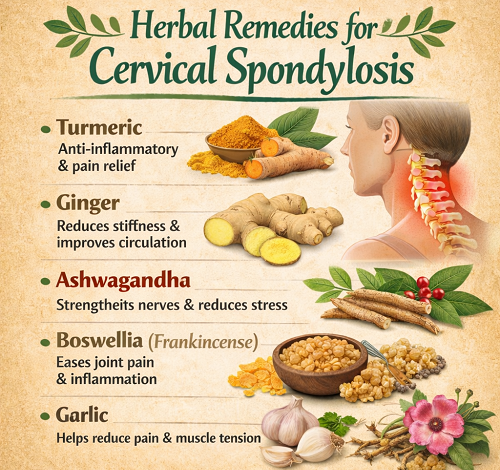
1. Turmeric (Curcuma Longa)
Turmeric is one of the most powerful Herbal Remedies for Cervical Spondylosis, thanks to its active compound curcumin.
Benefits:
- Reduces inflammation in joints and tissues
- Alleviates chronic pain
- Supports spinal health
How to Use:
- Add turmeric powder to warm milk
- Take curcumin supplements (consult a professional)
2. Ginger (Zingiber Officinale)
Ginger is widely recognized for its anti-inflammatory and analgesic effects, making it a cornerstone of Natural Remedies for Cervical Spondylosis.
Benefits:
- Relieves neck stiffness
- Improves blood circulation
- Reduces swelling
How to Use:
- Drink ginger tea twice daily
- Apply ginger oil for massage
3. Ashwagandha (Withania Somnifera)
Ashwagandha is an adaptogenic herb that strengthens muscles and reduces stress-related tension.
Benefits:
- Enhances muscle strength
- Reduces inflammation
- Supports nerve function
How to Use:
- Take ashwagandha powder with warm milk
- Use standardized herbal capsules
4. Boswellia (Indian Frankincense)
Boswellia is known for its potent anti-inflammatory properties, particularly beneficial for joint disorders.
Benefits:
- Reduces joint pain and swelling
- Improves mobility
- Supports cartilage health
How to Use:
- Take Boswellia extracts or supplements
- Use in combination with other herbal formulations
5. Garlic (Allium Sativum)
Garlic contains sulfur compounds that help reduce inflammation and improve circulation.
Benefits:
- Enhances blood flow to the spine
- Reduces stiffness
- Boosts immunity
How to Use:
- Consume raw garlic cloves daily
- Add to meals for consistent intake
6. Devil’s Claw
Devil’s Claw is a traditional herbal remedy used for treating musculoskeletal pain.
Benefits:
- Reduces neck pain
- Improves flexibility
- Acts as a natural pain reliever
How to Use:
- Available as capsules or extracts
7. Eucalyptus Oil
Eucalyptus oil is commonly used for topical pain relief.
Benefits:
- Provides instant cooling effect
- Relieves muscle tension
- Reduces inflammation
How to Use:
- Mix with a carrier oil and massage the neck area
8. Peppermint Oil
Peppermint oil offers soothing and analgesic effects, making it a valuable addition to Herbal Remedies.
Benefits:
- Relieves muscle spasms
- Provides cooling sensation
- Improves circulation
How to Use:
- Apply diluted oil for massage
9. Aloe Vera
Aloe vera is known for its anti-inflammatory and healing properties.
Benefits:
- Reduces inflammation
- Supports tissue repair
- Improves joint health
How to Use:
- Consume aloe vera juice
- Apply gel topically
10. Chamomile
Chamomile is a calming herb that helps reduce muscle tension and inflammation.
Benefits:
- Relieves stress-related neck pain
- Promotes relaxation
- Reduces inflammation
How to Use:
- Drink chamomile tea daily
Lifestyle Tips to Enhance Herbal Remedies
To maximize the effectiveness of Natural Remedies for Cervical Spondylosis, incorporate these lifestyle strategies:
1. Maintain Proper Posture
- Keep your spine aligned while sitting and standing
- Avoid slouching
2. Regular Neck Exercises
- Gentle stretching improves flexibility
- Strengthens neck muscles
3. Ergonomic Workspace
- Use a supportive chair
- Keep your screen at eye level
4. Hot and Cold Therapy
- Apply heat to relax muscles
- Use cold packs to reduce inflammation
5. Stay Active
- Engage in low-impact activities like walking or yoga
Diet for Cervical Spondylosis Relief
A nutrient-rich diet enhances the effectiveness of Herbal Remedies for Cervical Spondylosis.
Recommended Foods:
- Anti-inflammatory foods (leafy greens, berries)
- Omega-3 fatty acids (flaxseeds, walnuts)
- Calcium-rich foods (milk, almonds)
- Magnesium sources (bananas, spinach)
Foods to Avoid:
- Processed foods
- Sugary beverages
- Excess caffeine
- Fried and oily foods
Herbal Formulations and Supplements
Combining multiple herbs can enhance therapeutic effects. Look for formulations that include:
- Turmeric + Boswellia
- Ashwagandha + Ginger
- Garlic + Aloe Vera
These combinations offer synergistic benefits for reducing inflammation and improving joint function.
Precautions When Using Herbal Remedies
While Herbal Remedies are generally safe, consider the following:
- Consult a healthcare professional before starting new supplements
- Avoid excessive dosage
- Check for allergies
- Pregnant or breastfeeding individuals should seek medical advice
When to See a Doctor
Although Natural Remedies for Cervical Spondylosis can be highly effective, medical attention is necessary if:
- Pain becomes severe or persistent
- Numbness or weakness worsens
- Mobility is significantly reduced
Frequently Asked Questions (FAQs)
Are herbal remedies effective for cervical spondylosis?
Yes, many herbs have anti-inflammatory and pain-relieving properties that help manage symptoms naturally.
How long does it take to see results?
Results vary but consistent use for several weeks often shows noticeable improvement.
Can herbal remedies replace medications?
They can complement conventional treatments but should not replace prescribed medications without professional guidance.
Conclusion
Managing cervical spondylosis naturally is possible with the right approach. Herbal Remedies for Cervical Spondylosis offer a powerful combination of pain relief, inflammation reduction, and long-term spinal support. By integrating these remedies with healthy lifestyle habits, proper nutrition, and preventive care, individuals can achieve sustainable relief and improved quality of life.
For optimal results, consistency is key. Incorporate these Natural Remedies for Cervical Spondylosis into your daily routine and experience the benefits of holistic healing through proven Herbal Remedies.