
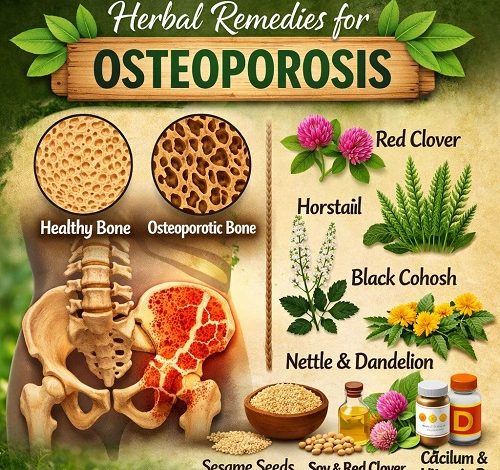
Osteoporosis is a silent condition that weakens bones over time, making them fragile and more prone to fractures. Often called the “silent disease,” it can progress without noticeable symptoms until a bone breaks. With increasing interest in natural health solutions, many people are turning toward Herbal Remedies for Osteoporosis to support bone strength and overall wellness. The most effective Natural Remedies for Osteoporosis, how they work, and how you can incorporate them into your daily routine for stronger bones—naturally and safely.
Understanding Osteoporosis
Osteoporosis occurs when bone density decreases and the body loses too much bone or fails to make enough new bone. This imbalance leads to porous, brittle bones.
Common Causes
- Aging
- Hormonal changes (especially in postmenopausal women)
- Calcium and vitamin D deficiency
- Sedentary lifestyle
- Smoking and excessive alcohol use
Symptoms
- Back pain
- Loss of height over time
- Stooped posture
- Fragile bones that fracture easily
While conventional treatments include medications and supplements, Herbal Remedies offer a natural supportive approach with fewer side effects.
Why Choose Herbal Remedies for Osteoporosis?
Herbal solutions have been used for centuries in traditional medicine systems like Ayurveda and Traditional Chinese Medicine. These remedies work by:
- Enhancing calcium absorption
- Promoting bone regeneration
- Reducing inflammation
- Balancing hormones
Unlike synthetic drugs, Herbal Remedies for Osteoporosis often support overall health while targeting bone density.
Top Herbal Remedies for Osteoporosis
1. Ashwagandha (Withania somnifera)
Ashwagandha is a powerful adaptogen known for its ability to balance hormones and reduce stress.
Benefits:
- Improves bone mineral density
- Reduces cortisol levels (which can weaken bones)
- Supports overall vitality
How to Use:
Take 300–500 mg of ashwagandha extract daily or consume it as a powder mixed with warm milk.
2. Turmeric (Curcuma longa)
Turmeric contains curcumin, a potent anti-inflammatory compound.
Benefits:
- Reduces bone loss
- Fights inflammation linked to osteoporosis
- Supports joint health
How to Use:
Add turmeric to meals or take curcumin supplements (500–1000 mg daily).
3. Horsetail (Equisetum arvense)
Horsetail is rich in silica, a mineral essential for bone formation.
Benefits:
- Enhances collagen production
- Strengthens bones and connective tissues
- Improves calcium absorption
How to Use:
Drink horsetail tea or take capsules as directed.
4. Red Clover (Trifolium pratense)
Red clover contains phytoestrogens that mimic estrogen in the body.
Benefits:
- Helps prevent bone loss in postmenopausal women
- Supports hormonal balance
- Improves bone density
How to Use:
Consume as tea or standardized extract supplements.
5. Nettle Leaf (Urtica dioica)
Nettle is packed with essential minerals like calcium, magnesium, and silica.
Benefits:
- Nourishes bones with vital nutrients
- Reduces inflammation
- Supports overall bone health
How to Use:
Drink nettle tea daily or add fresh leaves to soups.
6. Black Cohosh (Actaea racemosa)
Black cohosh is often used for menopausal symptoms and bone health.
Benefits:
- Mimics estrogen effects
- Slows bone loss
- Supports hormonal balance
How to Use:
Take as capsules or tincture under professional guidance.
7. Ginger (Zingiber officinale)
Ginger is a natural anti-inflammatory and antioxidant.
Benefits:
- Reduces bone inflammation
- Improves blood circulation
- Supports joint and bone health
How to Use:
Add fresh ginger to tea, meals, or smoothies.
8. Dandelion (Taraxacum officinale)
Dandelion is rich in calcium and vitamin K.
Benefits:
- Strengthens bones
- Supports liver health (important for nutrient metabolism)
- Provides essential minerals
How to Use:
Drink dandelion tea or add leaves to salads.
9. Alfalfa (Medicago sativa)
Alfalfa is a nutrient-dense herb beneficial for bone health.
Benefits:
- High in calcium and vitamin K
- Supports bone regeneration
- Enhances mineral absorption
How to Use:
Consume as tea, sprouts, or supplements.
10. Fenugreek (Trigonella foenum-graecum)
Fenugreek is known for its hormone-balancing effects.
Benefits:
- Supports estrogen levels
- Improves bone density
- Reduces inflammation
How to Use:
Soak seeds overnight and consume in the morning or use powder in meals.
How Herbal Remedies Improve Bone Health
1. Boosting Calcium Absorption
Herbs like nettle and horsetail help the body absorb calcium more efficiently.
2. Supporting Collagen Formation
Silica-rich herbs strengthen the bone matrix by enhancing collagen production.
3. Hormonal Balance
Phytoestrogen-rich herbs like red clover and black cohosh help maintain bone density, especially in women.
4. Reducing Inflammation
Chronic inflammation can weaken bones. Herbs like turmeric and ginger combat this effectively.
Diet Tips to Support Herbal Remedies
To maximize the benefits of Natural Remedies for Osteoporosis, combine them with a bone-friendly diet.
Foods to Include:
- Dairy products (milk, yogurt, cheese)
- Leafy greens (spinach, kale)
- Nuts and seeds (almonds, sesame)
- Fatty fish (salmon, sardines)
- Fortified foods
Foods to Avoid:
- Excess salt
- Carbonated drinks
- Processed foods
- Excess caffeine
Lifestyle Changes for Stronger Bones
Herbal treatments work best when combined with healthy habits.
1. Regular Exercise
Weight-bearing exercises like walking, jogging, and strength training improve bone density.
2. Sunlight Exposure
Vitamin D from sunlight helps calcium absorption.
3. Quit Smoking and Limit Alcohol
Both can weaken bones significantly.
4. Maintain a Healthy Weight
Being underweight increases fracture risk.
Are Herbal Remedies Safe?
While Herbal Remedies for Osteoporosis are generally safe, they are not completely risk-free.
Precautions:
- Consult a healthcare provider before starting any herbal treatment
- Avoid mixing herbs with medications without guidance
- Stick to recommended dosages
- Pregnant or breastfeeding women should be cautious
Combining Herbal Remedies with Supplements
For best results, herbal remedies can be combined with:
- Calcium supplements
- Vitamin D
- Magnesium
- Vitamin K2
This combination enhances bone-building effects and improves overall results.
How Long Do Herbal Remedies Take to Work?
Herbal treatments are not instant solutions. Unlike medications, they work gradually.
Expected Timeline:
- 2–4 weeks: Improved energy and reduced inflammation
- 2–3 months: Noticeable improvement in bone strength
- 6+ months: Significant changes in bone density (with consistent use)
Patience and consistency are key when using Natural Remedies for Osteoporosis.
Common Myths About Herbal Remedies for Osteoporosis
Myth 1: Herbs Work Instantly
Truth: Herbal remedies require time and consistency.
Myth 2: All Herbs Are Safe
Truth: Some herbs can interact with medications or cause side effects.
Myth 3: Herbs Alone Can Cure Osteoporosis
Truth: A combination of diet, lifestyle, and medical care is essential.
When to See a Doctor
While herbs can support bone health, medical supervision is important.
Seek medical advice if you:
- Experience frequent fractures
- Have severe bone pain
- Notice rapid loss of height
- Have a family history of osteoporosis
Final Thoughts
Osteoporosis may be a serious condition, but it’s not unbeatable. By incorporating Herbal Remedies for Osteoporosis into your lifestyle, you can naturally strengthen your bones and reduce the risk of fractures.
These Natural Remedies for Osteoporosis offer a holistic approach—supporting not just bone health but overall well-being. When combined with proper nutrition, exercise, and healthy habits, herbal solutions can make a significant difference in your bone health journey.