
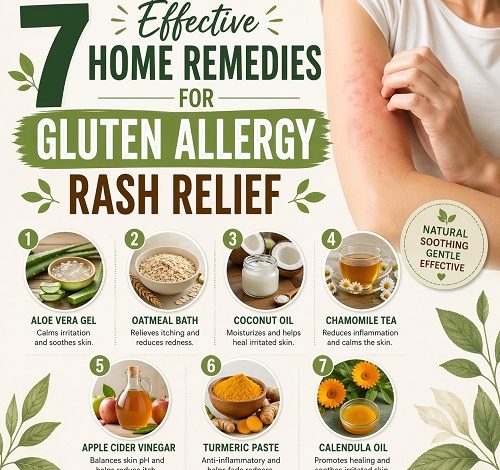
Living with a gluten allergy rash can be frustrating, uncomfortable, and sometimes even painful. The persistent itching, redness, and irritation often disrupt daily life and affect confidence. While medical treatments are important, many people turn to natural solutions to soothe their skin and support healing. 7 powerful Home Remedies for Gluten Allergy Rash using safe, natural, and effective Herbal Remedies. These remedies can help calm inflammation, reduce itching, and promote skin recovery—all from the comfort of your home.
Understanding Gluten Allergy Rash
Before diving into remedies, it’s important to understand what a Gluten Allergy Rash is.
A gluten allergy (or sensitivity) can trigger an immune reaction when gluten—a protein found in wheat, barley, and rye—is consumed. In some individuals, this reaction shows up on the skin as a rash, often linked to conditions like dermatitis herpetiformis.
Common Symptoms:
- Red, itchy patches
- Blisters or bumps
- Burning sensation
- Dry, flaky skin
- Rash on elbows, knees, scalp, or back
The key to managing this condition is a combination of avoiding gluten and using soothing treatments to reduce symptoms.
Why Choose Home Remedies?
Many people prefer Home Remedies for Gluten Allergy Rash because they are:
- Natural and chemical-free
- Affordable and easily accessible
- Gentle on sensitive skin
- Effective for long-term relief
These remedies often rely on Herbal Remedies that have anti-inflammatory, antibacterial, and soothing properties.
1. Aloe Vera Gel – Nature’s Skin Healer
Aloe vera is one of the most trusted Herbal Remedies for skin conditions.
Benefits:
- Reduces inflammation
- Soothes itching and burning
- Promotes skin healing
- Hydrates dry skin
How to Use:
- Extract fresh aloe vera gel from a leaf.
- Apply directly to the affected area.
- Leave it on for 20–30 minutes.
- Rinse with lukewarm water.
Frequency:
Use 2–3 times daily for best results.
2. Coconut Oil – Deep Moisturizing Relief
Coconut oil is rich in fatty acids and has strong antimicrobial properties.
Benefits:
- Moisturizes dry, irritated skin
- Reduces redness and itching
- Prevents infection
How to Use:
- Apply virgin coconut oil directly to the rash.
- Gently massage until absorbed.
Tip:
Use it before bedtime for overnight healing.
3. Oatmeal Bath – Instant Itch Relief
Colloidal oatmeal is widely used for skin irritation.
Benefits:
- Calms inflamed skin
- Relieves itching
- Softens rough patches
How to Use:
- Grind plain oats into a fine powder.
- Add 1 cup to warm bathwater.
- Soak for 15–20 minutes.
Frequency:
Use once daily during flare-ups.
4. Chamomile Tea Compress – Gentle Herbal Care
Chamomile is a powerful anti-inflammatory herb.
Benefits:
- Reduces redness and swelling
- Soothes irritated skin
- Promotes relaxation
How to Use:
- Brew chamomile tea and let it cool.
- Soak a clean cloth in the tea.
- Apply as a compress to the rash.
Duration:
Leave on for 10–15 minutes.
5. Apple Cider Vinegar – Natural Antiseptic
Apple cider vinegar (ACV) helps restore skin balance.
Benefits:
- Fights bacteria
- Reduces itching
- Balances skin pH
How to Use:
- Mix equal parts ACV and water.
- Apply using a cotton ball.
Important:
- Always dilute before use.
- Avoid if skin is cracked or bleeding.
6. Turmeric Paste – Anti-Inflammatory Power
Turmeric is a golden spice known for its healing properties.
Benefits:
- Reduces inflammation
- Speeds up healing
- Fights infection
How to Use:
- Mix turmeric powder with water or coconut oil.
- Apply as a paste on the rash.
- Leave for 15–20 minutes.
Note:
Turmeric may stain skin and clothing.
7. Neem Leaves – Traditional Skin Remedy
Neem is widely used in herbal medicine for skin conditions.
Benefits:
- Antibacterial and antifungal
- Reduces itching and redness
- Detoxifies the skin
How to Use:
- Boil neem leaves in water and let it cool.
- Use the water to wash affected areas.
OR
- Grind leaves into a paste and apply directly.
Additional Tips for Managing Gluten Allergy Rash
While these Home Remedies for Gluten Allergy Rash can provide relief, lifestyle changes are equally important.
1. Follow a Strict Gluten-Free Diet
Avoid foods containing:
- Wheat
- Barley
- Rye
- Processed foods with hidden gluten
2. Stay Hydrated
Drink plenty of water to flush out toxins and keep skin hydrated.
3. Use Gentle Skincare Products
Choose:
- Fragrance-free soaps
- Hypoallergenic moisturizers
4. Avoid Scratching
Scratching can worsen the rash and lead to infection.
5. Wear Loose Clothing
Tight clothes can irritate sensitive skin.
When to See a Doctor
Home remedies are helpful, but medical attention is necessary if:
- The rash spreads rapidly
- There is severe pain or swelling
- Blisters become infected
- Symptoms persist despite treatment
A healthcare professional can confirm if the rash is related to gluten and recommend appropriate treatment.
Combining Herbal Remedies for Better Results
You can combine multiple Herbal Remedies for enhanced benefits. For example:
- Use aloe vera during the day
- Apply coconut oil at night
- Take oatmeal baths during flare-ups
Consistency is key when using natural treatments.
Preventing Future Gluten Allergy Rash
Prevention is always better than cure.
Key Prevention Tips:
- Read food labels carefully
- Avoid cross-contamination
- Maintain a healthy diet
- Manage stress levels
- Support gut health with probiotics
Final Thoughts
Dealing with a Gluten Allergy Rash can be challenging, but natural solutions can make a significant difference. These Home Remedies for Gluten Allergy Rash offer safe, effective, and affordable ways to soothe your skin and reduce discomfort.
By combining these remedies with a gluten-free lifestyle and proper skincare, you can regain control over your skin health and enjoy a more comfortable, itch-free life.
Remember, patience and consistency are essential when using Herbal Remedies. While results may take time, the long-term benefits are well worth the effort.