
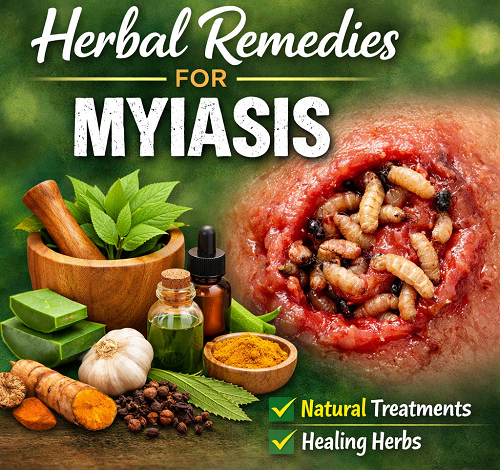
Myiasis is a distressing parasitic condition caused by fly larvae (maggots) infesting human or animal tissue. It most commonly affects the skin but can also occur in wounds, body cavities, or even internal organs in severe cases. This condition is more prevalent in tropical and subtropical regions, where hygiene challenges and warm climates favor the breeding of flies.
While conventional medical treatment often involves manual removal of larvae and the use of antibiotics, many people seek Herbal Remedies for Myiasis as supportive or alternative options. These natural approaches can help cleanse wounds, reduce infection, promote healing, and create an environment that discourages further infestation. The most effective Natural Remedies for Myiasis, how they work, and how to use them safely at home.
Understanding Myiasis
Myiasis occurs when flies lay eggs on open wounds, sores, or even intact skin in rare cases. Once the eggs hatch, larvae feed on the surrounding tissue, leading to symptoms such as:
- Painful swelling or lumps
- Foul-smelling discharge
- Visible movement under the skin
- Itching or irritation
- Secondary bacterial infections
The condition requires prompt attention, as untreated infestations can lead to severe complications.
Why Choose Herbal Remedies for Myiasis?
Herbal Remedies for Myiasis have been used traditionally for centuries due to their natural healing and antimicrobial properties. These remedies offer several benefits:
- Help cleanse and disinfect wounds
- Promote faster tissue repair
- Reduce inflammation and pain
- Naturally repel insects and larvae
- Support overall skin health
While herbal treatments can be effective, they should be used alongside proper hygiene and, in severe cases, medical supervision.
Top Herbal Remedies for Myiasis
1. Neem (Azadirachta indica)
Neem is one of the most powerful natural remedies for skin infections and parasitic conditions.
Benefits:
- Strong antibacterial and antifungal properties
- Acts as a natural insect repellent
- Helps in wound healing
How to Use:
- Boil neem leaves in water and use it to wash the affected area
- Apply neem oil diluted with a carrier oil directly to the wound
Neem creates an environment that is hostile to larvae, making it one of the most effective Herbal Remedies for Myiasis.
2. Turmeric (Curcuma longa)
Turmeric is widely known for its healing and anti-inflammatory effects.
Benefits:
- Natural antiseptic
- Reduces swelling and pain
- Speeds up tissue repair
How to Use:
- Mix turmeric powder with coconut oil to form a paste
- Apply gently to the affected area after cleaning
Regular use can help prevent secondary infections and support healing.
3. Tea Tree Oil
Tea tree oil is a potent essential oil with antimicrobial and antiparasitic properties.
Benefits:
- Kills bacteria and fungi
- Helps suffocate larvae
- Reduces odor and infection
How to Use:
- Dilute a few drops in a carrier oil
- Apply to the wound using a clean cotton swab
This is one of the most commonly recommended Natural Remedies for Myiasis due to its effectiveness.
4. Garlic
Garlic contains allicin, a compound known for its strong antimicrobial action.
Benefits:
- Fights infection
- Acts as a natural larvicidal agent
- Boosts immune response
How to Use:
- Crush fresh garlic and mix with a small amount of oil
- Apply carefully around (not directly inside deep wounds)
Garlic helps create an unfavorable environment for maggots.
5. Aloe Vera
Aloe vera is a soothing herb that supports skin regeneration.
Benefits:
- Promotes healing
- Reduces inflammation
- Moisturizes and protects skin
How to Use:
- Apply fresh aloe vera gel directly to the affected area
- Use after cleaning the wound
It is especially helpful after larvae removal to restore damaged skin.
6. Eucalyptus Oil
Eucalyptus oil has strong antiseptic and insect-repelling properties.
Benefits:
- Helps eliminate larvae
- Prevents reinfestation
- Reduces inflammation
How to Use:
- Dilute with a carrier oil
- Apply gently to the affected area
Its strong aroma also deters flies from laying eggs.
7. Basil (Tulsi)
Basil is a medicinal herb with antibacterial and anti-inflammatory properties.
Benefits:
- Supports wound healing
- Fights infection
- Acts as a natural insect repellent
How to Use:
- Crush fresh basil leaves and apply the juice
- Alternatively, use basil-infused water to clean wounds
Basil is a gentle yet effective option among Herbal Remedies for Myiasis.
8. Clove Oil
Clove oil contains eugenol, known for its antiseptic and analgesic properties.
Benefits:
- Relieves pain
- Kills microbes
- Helps remove larvae
How to Use:
- Dilute properly before application
- Apply around the affected area
Clove oil is particularly useful for reducing discomfort.
9. Camphor
Camphor is traditionally used to treat skin infections and repel insects.
Benefits:
- Strong insect-repelling properties
- Reduces itching
- Helps suffocate larvae
How to Use:
- Mix a small amount of camphor with coconut oil
- Apply carefully to the affected area
10. Coconut Oil
Coconut oil is a versatile natural remedy with antimicrobial benefits.
Benefits:
- Moisturizes and protects skin
- Helps suffocate larvae
- Supports healing
How to Use:
- Apply directly or mix with turmeric or neem oil
- Use regularly for best results
Important Steps When Using Natural Remedies for Myiasis
While Natural Remedies for Myiasis can be helpful, proper wound care is essential:
- Clean the Wound Thoroughly
Always wash the area with clean water or herbal decoctions like neem before applying any remedy. - Remove Visible Larvae
If possible, carefully remove larvae using sterilized tools or seek medical help. - Apply Herbal Treatment
Use selected herbal remedies to disinfect and heal the wound. - Cover the Wound
Keep the area covered with clean dressing to prevent further infestation. - Maintain Hygiene
Personal and environmental cleanliness is crucial to avoid recurrence.
Preventing Myiasis Naturally
Prevention is just as important as treatment. Here are some tips:
- Keep wounds clean and covered
- Maintain proper personal hygiene
- Dispose of waste properly to avoid attracting flies
- Use natural insect repellents like neem or eucalyptus oil
- Wear protective clothing in high-risk areas
When to Seek Medical Help
Although Herbal Remedies for Myiasis can be effective in mild cases, you should consult a healthcare professional if:
- The infestation is severe or deep
- There is intense pain or swelling
- You notice signs of systemic infection (fever, कमजोरी)
- Home remedies are not showing improvement
Medical intervention may include surgical removal of larvae and prescription medications.
Combining Herbal and Modern Approaches
The best approach to treating myiasis often involves a combination of natural and medical methods. Herbal remedies can:
- Enhance recovery after medical treatment
- Reduce infection risk
- Promote faster healing
However, they should not replace professional care in serious cases.
Final Thoughts
Myiasis can be a painful and alarming condition, but with timely care and the right approach, it is manageable. Herbal Remedies for Myiasis offer a natural, effective way to support healing, fight infection, and prevent recurrence.
From neem and turmeric to tea tree oil and aloe vera, these Natural Remedies for Myiasis harness the power of nature to restore skin health and protect against further infestation. When combined with proper hygiene and wound care, herbal treatments can play a significant role in recovery.
Always remember: early intervention is key. Whether you choose herbal solutions or medical treatment, addressing the condition promptly ensures the best possible outcome.