Top Herbal Remedies for Swimmer’s Itch That Soothe Skin Irritation Naturally

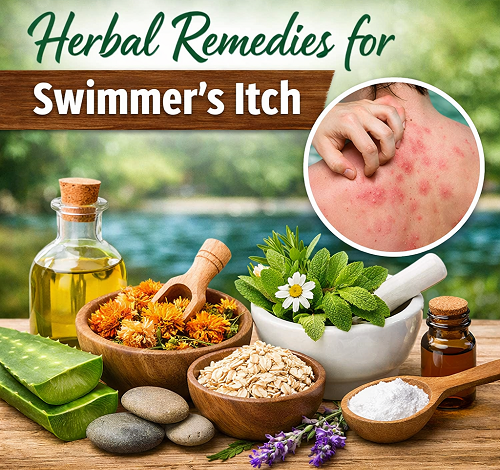
Swimming in lakes and ponds can be refreshing and therapeutic—but for some people, it’s followed by an intensely itchy, red rash known as swimmer’s itch. If you’ve ever stepped out of natural water only to notice tingling, small red bumps, or irritating blisters hours later, you may have experienced this uncomfortable condition.
Fortunately, there are effective Herbal Remedies for Swimmer’s Itch that can calm inflammation, ease itching, and support natural skin healing—without harsh chemicals. The causes of swimmer’s itch and the most powerful Herbal Remedies to soothe your skin naturally.
What Is Swimmer’s Itch?
Swimmer’s itch, medically known as cercarial dermatitis, is a skin reaction caused by microscopic parasites that live in freshwater snails. These parasites mistakenly burrow into human skin, triggering an allergic reaction.
Common symptoms include:
- Tingling or burning sensation after swimming
- Small red pimples or blisters
- Intense itching
- Rash appearing within hours of water exposure
The good news? The parasites cannot survive in human skin. The condition is not contagious, and symptoms typically resolve within a week. However, the itching can be extremely uncomfortable—which is where Herbal Remedies for Swimmer’s Itch become incredibly helpful.
Why Choose Herbal Remedies for Swimmer’s Itch?
Many over-the-counter creams contain synthetic steroids or antihistamines. While they can provide relief, frequent use may cause skin thinning or dryness.
Herbal Remedies offer several benefits:
- Gentle on sensitive skin
- Rich in anti-inflammatory compounds
- Naturally antimicrobial
- Support skin repair and hydration
- Minimal side effects when used properly
10 Most effective Herbal Remedies for Swimmer’s Itch
Now let’s explore the most effective Herbal Remedies for Swimmer’s Itch in detail.
1. Aloe Vera – Nature’s Cooling Skin Healer
One of the most trusted Herbal Remedies for Swimmer’s Itch is aloe vera. Known for its cooling and anti-inflammatory properties, aloe vera helps:
- Reduce redness
- Calm itching
- Promote skin regeneration
- Prevent secondary infection
How to Use:
Apply fresh aloe vera gel directly from the leaf to the affected area 2–3 times daily. Allow it to absorb completely.
Tip: Refrigerated aloe gel provides even faster itch relief.
2. Oatmeal Baths – Instant Itch Relief
Colloidal oatmeal has long been used as one of the most soothing Herbal Remedies for itchy skin conditions.
Oats contain compounds called avenanthramides, which:
- Reduce inflammation
- Soothe irritation
- Form a protective barrier on the skin
How to Use:
Grind plain oats into a fine powder and add one cup to lukewarm bathwater. Soak for 15–20 minutes.
Avoid hot water—it can worsen itching.
3. Calendula – Skin Repair Specialist
Calendula is a powerful anti-inflammatory herb widely used in skin care.
Benefits include:
- Speeds wound healing
- Reduces redness
- Fights bacterial growth
- Soothes irritation
Calendula creams and infused oils are excellent Herbal Remedies for Swimmer’s Itch when blisters are present.
How to Use:
Apply calendula ointment twice daily to affected areas.
4. Chamomile – Calming Relief for Sensitive Skin
Chamomile is famous for calming irritated skin. It contains bisabolol and flavonoids that reduce inflammation and itching.
Chamomile works well for:
- Red rashes
- Burning sensations
- Mild blistering
How to Use:
Brew strong chamomile tea, cool it, and apply as a compress for 10–15 minutes.
5. Witch Hazel – Natural Astringent
Witch hazel is an effective herbal astringent that:
- Reduces swelling
- Tightens pores
- Relieves itching
- Minimizes blister formation
It is one of the simplest Herbal Remedies for Swimmer’s Itch because it’s easy to apply.
How to Use:
Dab alcohol-free witch hazel onto the rash using a cotton pad twice daily.
6. Tea Tree Oil – Natural Antimicrobial Protection
Tea tree oil contains strong antimicrobial and anti-inflammatory compounds.
It helps:
- Prevent secondary infections from scratching
- Reduce redness
- Soothe inflamed skin
How to Use:
Dilute 2–3 drops of tea tree oil in one tablespoon of coconut oil before applying. Never use undiluted essential oil directly on irritated skin.
7. Coconut Oil – Moisturizing Barrier Repair
Virgin coconut oil is rich in lauric acid, which supports skin healing and reduces dryness.
Benefits:
- Prevents cracking
- Locks in moisture
- Reduces inflammation
Coconut oil is among the safest Herbal Remedies for Swimmer’s Itch, especially for children.
8. Neem – Traditional Skin Protector
Neem has been used in Ayurvedic medicine for centuries for skin disorders.
It offers:
- Antimicrobial protection
- Anti-inflammatory action
- Relief from itching
Neem paste or diluted neem oil can significantly reduce irritation.
9. Plantain Leaf – Natural Anti-Itch Herb
Plantain leaf (Plantago major) is an underrated but powerful herbal remedy.
It contains allantoin, which promotes skin healing and reduces inflammation.
How to Use:
Crush fresh leaves into a paste and apply directly to the rash.
10. Baking Soda Paste (Natural Support Option)
While not technically an herb, baking soda complements Herbal Remedies for Swimmer’s Itch by neutralizing skin irritation.
Mix baking soda with water to form a paste and apply for 10 minutes before rinsing.
Additional Tips to Speed Recovery
To enhance the effectiveness of Herbal Remedies:
- Avoid scratching
- Keep skin clean and dry
- Wear loose cotton clothing
- Apply cold compresses
- Avoid re-exposure to contaminated water
Most cases resolve within 3–7 days.
Preventing Swimmer’s Itch Naturally
Prevention is key. Here’s how to lower your risk:
- Towel dry immediately after swimming
- Shower with clean water
- Avoid shallow, snail-infested areas
- Swim in deeper water
- Use waterproof barrier creams before entering water
Combining prevention with Herbal Remedies ensures faster comfort and healthier skin.
When to See a Doctor
While Herbal Remedies for Swimmer’s Itch are usually sufficient, seek medical help if:
- Rash lasts longer than one week
- Severe swelling develops
- Pus or signs of infection appear
- Fever occurs
These may indicate secondary infection requiring prescription treatment.
Final Thoughts
Swimmer’s itch may be uncomfortable, but it’s temporary—and manageable. With the right Herbal Remedies for Swimmer’s Itch, you can reduce itching, calm inflammation, and support natural healing without harsh chemicals.
From soothing aloe vera and oatmeal baths to protective neem and calendula, these Herbal Remedies offer safe, gentle, and effective relief. The key is early application and proper skin care.
Next time you enjoy a refreshing swim in a lake or pond, you’ll be prepared—with nature’s best remedies at your side.