
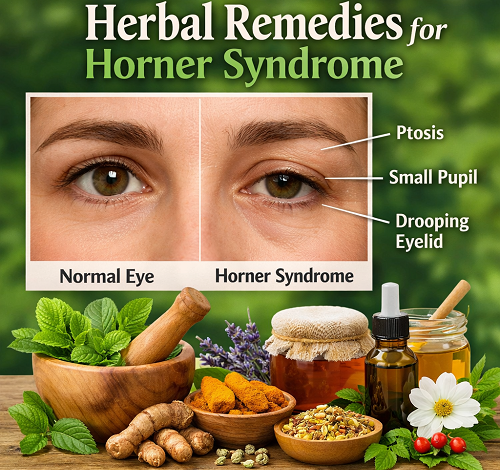
Horner syndrome is a rare neurological condition caused by disruption of the sympathetic nerves supplying the eye and surrounding facial structures. Its hallmark symptoms include ptosis (drooping eyelid), miosis (constricted pupil), anhidrosis (lack of sweating) on the affected side of the face, and enophthalmos (sunken eye). While conventional medicine focuses on diagnosing and addressing the underlying cause, complementary approaches like herbal remedies can play a supportive role in improving nerve function, reducing inflammation, and enhancing overall eye health. The top herbal remedies for Horner Syndrome and how natural remedies for Horner Syndrome can promote eye and nerve health.
Understanding Horner Syndrome
Horner syndrome occurs due to damage or disruption along the sympathetic nerve pathway that extends from the brain to the eye and face. The condition can result from various causes, including:
- Trauma to the neck or head
- Stroke or brain tumor
- Spinal cord injury
- Cluster headaches or migraines
- Certain infections affecting the nervous system
Symptoms usually appear on one side of the face and can vary in severity. While medical treatment addresses the underlying cause, patients often seek natural support to relieve symptoms and improve quality of life. Herbal remedies have been traditionally used to support nerve health, improve circulation, and reduce inflammation, making them a promising adjunct therapy for Horner syndrome.
How Herbal Remedies Support Horner Syndrome
Herbal remedies can be effective in managing the symptoms of Horner syndrome and supporting nerve and eye health through several mechanisms:
- Neuroprotective Effects: Certain herbs contain compounds that protect nerves from damage and promote regeneration.
- Anti-inflammatory Properties: Inflammation can exacerbate nerve damage, and anti-inflammatory herbs help reduce swelling and irritation.
- Enhanced Blood Circulation: Improved blood flow can nourish nerves and ocular tissues, supporting recovery.
- Antioxidant Support: Oxidative stress contributes to nerve dysfunction, and herbs rich in antioxidants can mitigate these effects.
By integrating natural remedies for Horner Syndrome, patients may experience improved nerve signaling, reduced discomfort, and better eye function over time.
Top Herbal Remedies for Horner Syndrome
1. Ginkgo Biloba
Ginkgo biloba is renowned for its ability to enhance blood circulation and support cognitive and neural health. It contains flavonoids and terpenoids that improve oxygenation and reduce oxidative stress.
- Benefits for Horner Syndrome:
- Improves blood flow to ocular nerves
- Supports nerve regeneration
- Protects against oxidative damage
- Usage: Take ginkgo biloba as a standardized extract (120–240 mg/day) after consulting a healthcare provider.
2. Bacopa Monnieri
Bacopa monnieri, also known as Brahmi, is a traditional Ayurvedic herb known for its neuroprotective and cognitive-enhancing properties. It strengthens nerve function and aids in the repair of damaged neurons.
- Benefits for Horner Syndrome:
- Enhances nerve signaling and neurotransmitter function
- Reduces nerve inflammation
- Improves overall neurological health
- Usage: Commonly available as capsules (300 mg/day) or as a tincture. Regular use over several weeks is needed to see effects.
3. Ashwagandha (Withania somnifera)
Ashwagandha is an adaptogenic herb that helps the body cope with stress and supports the nervous system. It has anti-inflammatory, antioxidant, and nerve-protective properties.
- Benefits for Horner Syndrome:
- Promotes nerve regeneration
- Reduces inflammation in the sympathetic nerve pathways
- Supports ocular health
- Usage: 500–600 mg of standardized extract daily or as per Ayurvedic guidelines.
4. Turmeric (Curcuma longa)
Turmeric, the golden spice, contains curcumin, a powerful anti-inflammatory and antioxidant compound. It has been widely studied for its role in supporting nerve health and reducing inflammation.
- Benefits for Horner Syndrome:
- Protects nerves from oxidative stress
- Reduces inflammation along sympathetic pathways
- Supports healing of damaged tissue
- Usage: Incorporate turmeric in diet or take curcumin supplements (500 mg, twice daily) with black pepper for enhanced absorption.
5. Lion’s Mane Mushroom (Hericium erinaceus)
Lion’s Mane is a medicinal mushroom known for its nerve-regenerative properties. It stimulates nerve growth factor (NGF), which is crucial for repairing damaged nerves.
- Benefits for Horner Syndrome:
- Stimulates nerve regeneration
- Supports brain and ocular nerve function
- Enhances cognitive and neurological resilience
- Usage: Available in capsules, powders, or teas. Recommended dose: 500–1000 mg daily.
6. Gotu Kola (Centella asiatica)
Gotu Kola has been used in traditional medicine to support nerve health, circulation, and wound healing. Its bioactive compounds reduce oxidative stress and promote nerve regeneration.
- Benefits for Horner Syndrome:
- Supports repair of damaged sympathetic nerves
- Enhances microcirculation to ocular tissues
- Reduces neurological inflammation
- Usage: Take 250–500 mg of standardized extract twice daily or consume as a tea.
7. Feverfew (Tanacetum parthenium)
Feverfew is known for its effectiveness in reducing nerve-related headaches and inflammation. It may be beneficial for patients with Horner syndrome caused by cluster headaches or migraines.
- Benefits for Horner Syndrome:
- Reduces nerve irritation and inflammation
- Supports ocular comfort
- May relieve headache-related nerve stress
- Usage: Capsules containing 50–150 mg of feverfew extract daily, or consume fresh leaves under guidance.
8. Rosemary (Rosmarinus officinalis)
Rosemary is rich in antioxidants and anti-inflammatory compounds. Its stimulating effects can enhance circulation and support nerve function.
- Benefits for Horner Syndrome:
- Improves blood flow to the eye and nerves
- Reduces oxidative stress and inflammation
- Promotes overall neural health
- Usage: Use rosemary essential oil for aromatherapy or culinary use; supplements are also available.
9. Chamomile (Matricaria chamomilla)
Chamomile is well-known for its calming and anti-inflammatory properties. While often used for relaxation, it can also support nerve health by reducing inflammation and oxidative stress.
- Benefits for Horner Syndrome:
- Calms nerve irritation
- Supports ocular tissue repair
- Provides antioxidant support
- Usage: Drink chamomile tea 1–2 times daily or use chamomile extract as a supplement.
10. Green Tea (Camellia sinensis)
Green tea is rich in catechins and polyphenols, which protect nerves and promote healthy circulation. Its neuroprotective effects can benefit patients with Horner syndrome.
- Benefits for Horner Syndrome:
- Reduces oxidative stress in ocular nerves
- Supports nerve repair and regeneration
- Enhances overall nerve health
- Usage: Drink 2–3 cups of green tea daily or take green tea extract capsules.
Lifestyle Measures to Complement Herbal Remedies
In addition to herbal remedies for Horner Syndrome, certain lifestyle changes can further support eye and nerve health:
- Balanced Nutrition: Consume foods rich in B-vitamins, omega-3 fatty acids, and antioxidants to nourish nerves and ocular tissues.
- Regular Exercise: Physical activity improves blood circulation, which can support nerve repair and ocular health.
- Stress Management: Chronic stress may exacerbate nerve dysfunction. Techniques such as yoga, meditation, and deep breathing can help.
- Adequate Sleep: Sleep supports nerve repair and overall neurological health.
- Eye Care: Protect eyes from strain and UV exposure to reduce additional stress on ocular nerves.
Combining Herbal Remedies with Conventional Treatment
Herbal remedies are most effective when used as a complementary approach alongside conventional medical care. While herbs can support nerve health and reduce symptoms, it’s crucial to address the underlying cause of Horner syndrome, which may involve:
- Surgical intervention (for tumors or trauma)
- Medications to treat infections, inflammation, or underlying neurological disorders
- Physical therapy to improve facial and ocular muscle function
Always consult a healthcare professional before starting any herbal regimen, especially if you are on prescription medications or have underlying medical conditions.
Precautions When Using Herbal Remedies
While herbal remedies offer numerous benefits, they must be used safely:
- Choose high-quality, standardized herbal extracts.
- Monitor for allergic reactions or side effects.
- Avoid self-medicating for serious underlying conditions without consulting a doctor.
- Use herbs in moderation and follow recommended dosages.
Herbs are supportive, not a substitute for medical treatment, and their effects may take weeks to manifest.
Conclusion
Horner syndrome is a complex neurological disorder, but natural interventions can play a supportive role in symptom management and nerve health. Herbal remedies for Horner Syndrome such as ginkgo biloba, bacopa monnieri, ashwagandha, turmeric, lion’s mane, and gotu kola provide neuroprotective, anti-inflammatory, and antioxidant support. Incorporating these natural remedies for Horner Syndrome along with a healthy lifestyle, stress management, and conventional care can enhance eye health, promote nerve regeneration, and improve overall quality of life.
By taking a holistic approach, patients may find relief from symptoms while supporting long-term neural and ocular well-being. Always consult a healthcare provider before initiating herbal therapy to ensure safe and effective treatment.