
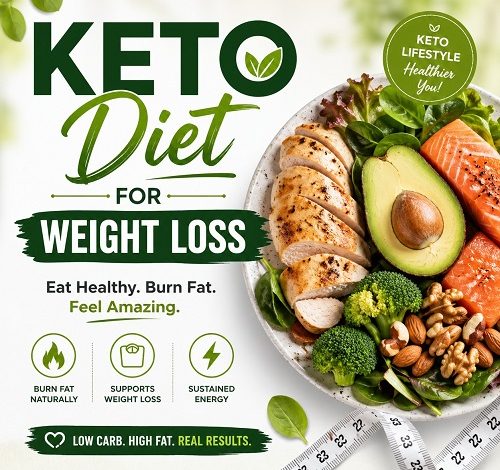
The Keto Diet for Weight Loss has become one of the most popular approaches for shedding extra pounds and improving overall health. With countless success stories and a growing body of research, many people are turning to this low-carb, high-fat eating plan as a powerful tool to transform their bodies.
But what exactly is the keto diet? Is it safe? And what can you realistically expect when you start?
The Keto Diet for Weight Loss, including its benefits, potential risks, and how to follow a sustainable Diet Plan for Weight Loss.
What Is the Keto Diet?
The ketogenic diet, commonly known as the keto diet, is a low-carbohydrate, high-fat diet designed to shift your body’s metabolism into a state called ketosis.
Normally, your body uses carbohydrates as its primary energy source. However, when carb intake is drastically reduced (usually to 20–50 grams per day), your body starts breaking down fat into ketones, which are then used as fuel.
Macronutrient Breakdown:
- Fat: 70–75%
- Protein: 20–25%
- Carbohydrates: 5–10%
This metabolic shift is what makes the Keto Diet for Weight Loss so effective.
How the Keto Diet Promotes Weight Loss
The keto diet works through several mechanisms that support fat loss:
1. Burns Stored Fat
When carbs are limited, your body taps into fat stores for energy, leading to weight loss.
2. Reduces Appetite
High-fat and protein-rich meals are more satisfying, helping you feel full longer and eat fewer calories.
3. Lowers Insulin Levels
Reduced carbohydrate intake lowers insulin levels, making it easier for your body to burn fat.
4. Increases Fat Burning Efficiency
Ketosis enhances your body’s ability to use fat as a primary fuel source.
Benefits of the Keto Diet for Weight Loss
1. Rapid Initial Weight Loss
Many people notice quick results within the first few weeks. This is partly due to water weight loss but also indicates fat burning.
2. Improved Blood Sugar Control
The keto diet helps stabilize blood sugar levels, which can benefit people with insulin resistance or type 2 diabetes.
3. Enhanced Mental Clarity
Ketones provide a steady energy source for the brain, improving focus and cognitive function.
4. Increased Energy Levels
Once adapted to ketosis, many people report sustained energy throughout the day.
5. Better Heart Health Markers
Some studies show improvements in cholesterol levels, including increased HDL (good cholesterol).
6. Reduced Cravings
By eliminating sugar and processed carbs, cravings for unhealthy foods often decrease significantly.
What to Expect When Starting the Keto Diet
Transitioning to the Keto Diet for Weight Loss can come with both positive and challenging experiences.
Week 1: The Keto Flu
You may experience symptoms such as:
- Headaches
- Fatigue
- Irritability
- Nausea
This is known as the “keto flu” and usually lasts a few days to a week.
Weeks 2–4: Adaptation Phase
Your body becomes more efficient at burning fat, and energy levels start to improve.
After 1 Month: Fat Loss and Stability
You’ll likely notice:
- Reduced appetite
- Steady weight loss
- Improved focus
Sample Keto Diet Plan for Weight Loss
Here’s a simple Diet Plan for Weight Loss based on keto principles:
Breakfast:
- Scrambled eggs with spinach and cheese
- Avocado slices
Lunch:
- Grilled chicken salad with olive oil dressing
- Mixed greens and nuts
Dinner:
- Salmon cooked in butter
- Steamed broccoli
Snacks:
- Almonds
- Cheese cubes
- Boiled eggs
Foods to Eat on a Keto Diet
Healthy Fats:
- Avocados
- Olive oil
- Butter
- Coconut oil
Protein Sources:
- Eggs
- Chicken
- Fish
- Beef
Low-Carb Vegetables:
- Spinach
- Kale
- Broccoli
- Zucchini
Dairy:
- Cheese
- Heavy cream
- Greek yogurt (in moderation)
Foods to Avoid
To succeed on the Keto Diet for Weight Loss, avoid:
- Sugary foods (cakes, candy, soda)
- Grains (rice, wheat, pasta)
- Starchy vegetables (potatoes, corn)
- High-carb fruits (bananas, grapes)
- Processed foods
Risks and Side Effects of the Keto Diet
While effective, the keto diet is not without risks.
1. Nutrient Deficiencies
Eliminating food groups can lead to deficiencies in vitamins and minerals.
2. Keto Flu
Temporary but uncomfortable symptoms during the initial phase.
3. Digestive Issues
Low fiber intake may cause constipation.
4. Increased Cholesterol
Some individuals may experience a rise in LDL cholesterol.
5. Not Suitable for Everyone
People with certain medical conditions should avoid keto or consult a doctor first.
Who Should Avoid the Keto Diet?
The keto diet may not be suitable for:
- Pregnant or breastfeeding women
- People with liver or kidney disease
- Individuals with a history of eating disorders
- Those on certain medications
Always consult a healthcare professional before starting any Diet Plan for Weight Loss.
Tips for Success on the Keto Diet
1. Stay Hydrated
Drink plenty of water to prevent dehydration and reduce keto flu symptoms.
2. Track Your Macros
Use apps to monitor your carb, fat, and protein intake.
3. Plan Your Meals
Meal planning helps you stay consistent and avoid high-carb temptations.
4. Include Electrolytes
Add sodium, potassium, and magnesium to your diet to maintain balance.
5. Be Patient
Weight loss may slow after the initial phase—consistency is key.
Common Mistakes to Avoid
- Eating too much protein
- Not consuming enough fat
- Ignoring hidden carbs
- Skipping vegetables
- Giving up too early
Keto Diet vs Other Diet Plans
Keto vs Low-Fat Diet
- Keto focuses on fats, while low-fat diets emphasize carbs.
- Keto often leads to faster weight loss.
Keto vs Intermittent Fasting
- Both can be combined for better results.
- Fasting enhances ketosis.
Keto vs Balanced Diet Plan
- Keto is more restrictive but can be more effective for rapid fat loss.
- A balanced Diet Plan for Weight Loss may be easier to maintain long-term.
Long-Term Sustainability of the Keto Diet
One of the biggest concerns with the keto diet is sustainability.
While it can be highly effective in the short term, maintaining such a restrictive diet long-term can be challenging. Many people transition to a moderate low-carb diet after achieving their weight loss goals.
Frequently Asked Questions
1. How fast can I lose weight on keto?
Most people lose 2–10 pounds in the first month, depending on body type and adherence.
2. Can I exercise on keto?
Yes, but performance may decrease initially until your body adapts.
3. Is keto safe long-term?
More research is needed. It’s best to consult a healthcare provider.
4. Can I have cheat days?
Cheat days can disrupt ketosis and slow progress.
Final Thoughts
The Keto Diet for Weight Loss is a powerful and effective method for shedding excess weight, improving metabolic health, and boosting energy levels. By shifting your body into ketosis, this diet encourages fat burning and reduces appetite, making it easier to stick to your goals.
However, it’s not a one-size-fits-all solution. Like any Diet Plan for Weight Loss, success depends on consistency, proper planning, and understanding your body’s needs.
If approached correctly, the keto diet can be a transformative tool in your weight loss journey—but always prioritize balance, nutrition, and long-term sustainability.