
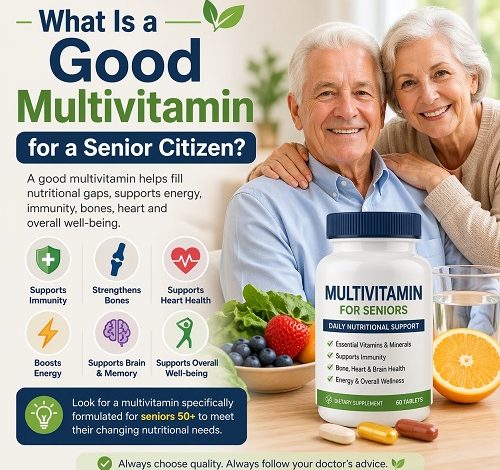
Aging brings wisdom—but it also brings changes in metabolism, digestion, and nutrient absorption. Many seniors eat less, absorb fewer nutrients, or take medications that interfere with vitamin uptake. That’s where multivitamins can play a supportive role.
However, not all multivitamins are suitable for older adults. A good multivitamin for seniors must be:
- Balanced (not excessive doses)
- Tailored for age-related needs
- Easy to absorb
- Free from unnecessary ingredients (like excess iron)
Let’s explore everything in detail.
Why Seniors May Need a Multivitamin
1. Reduced Nutrient Absorption
As we age, the body’s ability to absorb certain nutrients—especially vitamin B12—declines due to changes in the stomach lining.
2. Lower Appetite
Older adults often eat smaller meals, which can lead to nutritional gaps.
3. Medication Interactions
Many seniors take medications that can reduce levels of key vitamins like magnesium, potassium, or B vitamins.
4. Increased Nutrient Needs
Some nutrients (like calcium and vitamin D) become more important with age for bone health.
Key Nutrients Seniors Need in a Multivitamin
A good senior multivitamin should include the following essential nutrients:
1. Vitamin B12
- Supports brain function and nerve health
- Helps prevent anemia
- Harder to absorb with age
Deficiency can lead to fatigue, memory problems, and weakness.
2. Vitamin D
- Supports bone strength
- Helps calcium absorption
- Boosts immune function
Many seniors are deficient due to less sun exposure.
3. Calcium
- Essential for strong bones
- Helps prevent osteoporosis
Adults over 70 typically need around 1,200 mg daily.
4. Magnesium
- Supports muscles and nerves
- Helps regulate blood sugar
5. Potassium
- Supports heart health
- Helps regulate blood pressure
6. Antioxidants (Vitamin C, E, Zinc, Selenium)
- Protect cells from damage
- Support immune system
These become increasingly important after age 60.
7. B-Complex Vitamins
- Improve energy levels
- Support metabolism
What Makes a Multivitamin “Good” for Seniors?
A good multivitamin is not just about ingredients—it’s about quality, safety, and suitability.
✔ 1. Age-Specific Formula
Look for labels like:
- “50+”
- “Senior”
- “Men/Women 60+”
These formulas are designed for changing nutritional needs.
✔ 2. Moderate Dosages
Avoid “mega-dose” vitamins. Seniors need balanced nutrition, not excessive amounts.
Too much of certain vitamins (like A or iron) can be harmful.
✔ 3. Low or No Iron
Most seniors do not need extra iron, unless prescribed by a doctor.
Excess iron can cause digestive issues and other complications.
✔ 4. Easy-to-Absorb Forms
Look for:
- Methylcobalamin (B12)
- Vitamin D3 (not D2)
- Chelated minerals
These forms are easier for older bodies to absorb.
✔ 5. Third-Party Testing
Choose products tested by:
- USP (United States Pharmacopeia)
- NSF International
These ensure purity and accurate labeling.
✔ 6. Simple, Transparent Labels
Avoid “proprietary blends” that don’t show exact ingredient amounts.
Types of Multivitamins for Seniors
1. General Senior Multivitamins
These provide a balanced mix of vitamins and minerals for overall health.
Best for:
- Healthy seniors with mild nutrient gaps
2. Gender-Specific Multivitamins
For Men:
- More zinc and vitamin D
- Usually iron-free
For Women:
- Higher calcium and vitamin D
- Focus on bone health
3. Whole-Food Multivitamins
Made from natural food sources (fruits, vegetables).
Benefits:
- Easier on digestion
- More natural nutrient profile
4. Liquid or Gummy Multivitamins
Best for seniors who:
- Have trouble swallowing pills
- Have digestive issues
Popular Multivitamin Options for Seniors
Here are some commonly recommended types (based on expert and clinical guidance):
1. Centrum Silver (50+)
- Balanced formula
- Supports brain and heart health
2. Nature Made Multi for Him/Her 50+
- USP verified
- Good for daily nutritional support
3. Garden of Life Vitamin Code 50+
- Whole-food based
- Includes probiotics
4. Thorne Basic Nutrients 2/Day
- High-quality ingredients
- Good absorption
5. MegaFood Multivitamin 55+
- Gentle on stomach
- Food-based nutrients
Product Comparison Table (Senior Multivitamins)
| Feature | Centrum Silver | Nature Made 50+ | Garden of Life 50+ | Thorne Basic Nutrients | MegaFood 55+ |
| Age-specific formula | Yes | Yes | Yes | Yes | Yes |
| Iron-free | Mostly | Yes | Yes | Yes | Yes |
| Whole-food based | No | No | Yes | No | Yes |
| Third-party tested | Yes | Yes | Yes | Yes | Yes |
| Easy absorption | Moderate | Moderate | High | High | High |
| Best for | General use | Budget-friendly | Natural option | Premium quality | Sensitive stomach |
How to Choose the Right Multivitamin
Step 1: Identify Health Needs
Ask:
- Do you have bone issues? → Look for calcium + vitamin D
- Low energy? → Focus on B vitamins
- Weak immunity? → Choose antioxidant-rich formulas
Step 2: Check Your Diet
If your diet already includes certain nutrients, you may not need high doses in supplements.
Step 3: Review Medical Conditions
Conditions like:
- Diabetes
- Heart disease
- Kidney problems
may require specialized supplements.
Step 4: Consult a Doctor
This is especially important if:
- You take medications
- You have chronic illness
Multivitamins can interact with medications.
Benefits of Multivitamins for Seniors
✔ Fill Nutritional Gaps
They help cover missing nutrients from diet.
✔ Support Energy Levels
B vitamins help reduce fatigue.
✔ Improve Bone Health
Calcium + vitamin D reduce fracture risk.
✔ Boost Immunity
Antioxidants strengthen the immune system.
✔ Support Brain Health
B12 and omega-related nutrients help cognitive function.
Limitations and Risks
Multivitamins are helpful—but not magic.
⚠ They Don’t Replace Food
A healthy diet is still the best source of nutrients.
⚠ Not a Cure for Disease
They don’t prevent or cure chronic illnesses.
⚠ Risk of Overdose
Too much of certain vitamins can be harmful.
⚠ Possible Side Effects
- Nausea
- Headaches
- Digestive upset
Real-World Insights (From Community Discussions)
On forums like Reddit, many users emphasize:
- Focus on B12, vitamin D, and calcium
- Choose simple, well-reviewed products
- Avoid overcomplicated formulas
“Most important… is activity… no multivitamin will help if they are not active.”
This highlights an important truth: lifestyle matters as much as supplements.
Natural Alternatives to Multivitamins
If you prefer not to take supplements, focus on:
Diet-Based Nutrients
- Dairy → calcium
- Fish → vitamin D
- Eggs → B12
- Leafy greens → magnesium
Lifestyle Habits
- Sun exposure (for vitamin D)
- Regular exercise
- Hydration
Who Should Definitely Consider Multivitamins?
Multivitamins may be especially helpful for seniors who:
- Have poor appetite
- Follow restrictive diets
- Have digestive disorders
- Are deficient in key nutrients
Who Might Not Need Them?
Healthy seniors with a balanced diet may not benefit significantly.
Experts often say supplements are situational, not universal.
Final Thoughts
So, what is a good multivitamin for a senior citizen?
A good one is:
- Tailored for age (50+ or 60+)
- Contains B12, vitamin D, calcium, and antioxidants
- Uses moderate doses
- Is iron-free (unless needed)
- Has third-party testing
Most importantly, it should match the individual’s health needs, diet, and medical condition.