
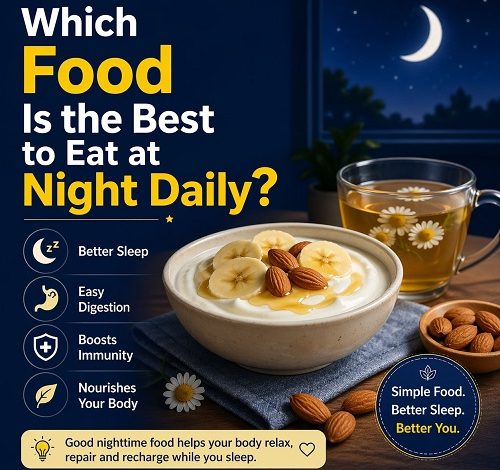
Eating at night is often surrounded by confusion. Some people believe that eating late leads to weight gain, while others argue that the right nighttime foods can actually improve sleep, metabolism, and overall health. The truth lies somewhere in between. It’s not just when you eat—it’s what you eat that matters most. The best foods to eat at night daily, how they affect your body, and how to build a healthy nighttime eating routine that supports better sleep, digestion, and long-term wellness.
Understanding Nighttime Eating
Before diving into specific foods, it’s important to understand how your body behaves at night. As evening approaches, your metabolism naturally slows down. Your body begins preparing for rest, focusing more on repair and recovery rather than digestion.
Eating heavy, greasy, or sugary foods late at night can disrupt this process. It may lead to:
- Poor sleep quality
- Indigestion or acid reflux
- Weight gain over time
- Blood sugar imbalances
On the other hand, eating the right foods in moderation can:
- Promote restful sleep
- Stabilize blood sugar
- Prevent late-night cravings
- Support muscle recovery
What Makes a Food Ideal for Night?
Not all foods are suitable for nighttime consumption. The best foods to eat at night share certain characteristics:
1. Easy to Digest
Your digestive system slows down at night, so lighter foods are better.
2. Rich in Sleep-Promoting Nutrients
Foods containing magnesium, tryptophan, or melatonin can help improve sleep.
3. Low in Sugar and Unhealthy Fats
These can spike energy levels and disrupt sleep cycles.
4. Balanced Macronutrients
A combination of protein, healthy fats, and complex carbohydrates is ideal.
Best Foods to Eat at Night Daily
Let’s explore the top foods you can safely include in your nightly routine.
1. Warm Milk
Warm milk is one of the most traditional nighttime drinks—and for good reason.
It contains tryptophan, an amino acid that helps produce serotonin and melatonin, both of which are essential for sleep.
Benefits:
- Promotes relaxation
- Helps you fall asleep faster
- Soothes the digestive system
How to consume:
Drink a small glass of warm milk 30–60 minutes before bed.
2. Bananas
Bananas are an excellent nighttime snack due to their rich nutrient profile.
They contain magnesium and potassium, which help relax muscles and calm the nervous system.
Benefits:
- Prevents nighttime muscle cramps
- Supports deep sleep
- Provides natural sweetness without processed sugar
How to consume:
Eat one medium banana alone or with a small amount of peanut butter.
3. Almonds
Almonds are packed with magnesium, a mineral known to improve sleep quality.
They also contain healthy fats and protein, making them a satisfying nighttime snack.
Benefits:
- Regulates sleep hormones
- Keeps you full longer
- Supports heart health
How to consume:
A handful (about 8–10 almonds) is enough.
4. Oatmeal
Oatmeal isn’t just for breakfast—it can also be a great nighttime meal.
It contains complex carbohydrates that help increase serotonin levels in the brain.
Benefits:
- Promotes calmness
- Keeps blood sugar stable
- Aids digestion
How to consume:
Prepare a small bowl with milk and avoid adding too much sugar.
5. Yogurt
Yogurt is rich in calcium, which helps the brain use tryptophan effectively.
It’s also easy to digest and supports gut health.
Benefits:
- Improves digestion
- Enhances sleep quality
- Provides protein for muscle repair
How to consume:
Choose plain or low-sugar yogurt. Add a few berries if desired.
6. Cottage Cheese
Cottage cheese is high in casein protein, which digests slowly and supports muscle repair overnight.
Benefits:
- Keeps you full through the night
- Supports muscle growth
- Low in fat (if you choose a low-fat version)
How to consume:
Eat a small bowl before bed.
7. Herbal Tea
Herbal teas like chamomile, peppermint, or lavender are excellent nighttime beverages.
Benefits:
- Reduces stress and anxiety
- Promotes relaxation
- Improves sleep quality
How to consume:
Drink a warm cup 30 minutes before bedtime.
8. Kiwi
Kiwi is surprisingly effective for improving sleep.
It contains antioxidants and serotonin, which help regulate sleep cycles.
Benefits:
- Helps you fall asleep faster
- Improves sleep duration
- Supports immune health
How to consume:
Eat one or two kiwis before bed.
9. Boiled Eggs
Eggs are a great source of high-quality protein and can be a light yet satisfying nighttime snack.
Benefits:
- Supports muscle repair
- Keeps hunger under control
- Low in calories
How to consume:
One or two boiled eggs are sufficient.
10. Whole Grain Toast
Whole grain bread provides complex carbohydrates that help increase serotonin production.
Benefits:
- Stabilizes blood sugar
- Promotes relaxation
- Easy to digest
How to consume:
Pair with a small amount of peanut butter or avocado.
Foods You Should Avoid at Night
Just as important as choosing the right foods is avoiding the wrong ones.
1. Fried and Oily Foods
These are heavy and difficult to digest.
2. Sugary Snacks
They can spike energy levels and disrupt sleep.
3. Caffeinated Drinks
Avoid coffee, energy drinks, and even some teas.
4. Spicy Foods
They can cause acid reflux and discomfort.
5. Large Meals
Overeating at night can lead to poor sleep and weight gain.
How Much Should You Eat at Night?
Portion control is key. Even healthy foods can cause problems if eaten in large amounts.
Guidelines:
- Keep snacks small (150–300 calories)
- Eat at least 1–2 hours before bed
- Avoid eating out of boredom
Nighttime Eating and Weight Management
Many people worry that eating at night leads to weight gain. The truth is:
- Weight gain depends on total daily calorie intake
- Healthy nighttime snacks can actually prevent overeating the next day
- Balanced snacks help maintain metabolism
The key is to choose nutrient-dense foods and control portions.
Creating a Healthy Nighttime Routine
To get the most benefit from your nighttime meals, follow these habits:
1. Set a Consistent Eating Time
Try to eat your last meal at the same time every day.
2. Keep It Light
Avoid heavy or large meals late at night.
3. Stay Hydrated
Drink water throughout the day, but limit excessive fluids before bed.
4. Avoid Screens While Eating
Mindful eating improves digestion.
5. Combine with Good Sleep Hygiene
A healthy diet works best when paired with a consistent sleep schedule.
Sample Nighttime Snack Ideas
Here are a few simple combinations you can try:
- Banana + almond butter
- Yogurt + honey + berries
- Oatmeal + milk + cinnamon
- Whole grain toast + avocado
- Cottage cheese + sliced fruit
Special Considerations
For People with Diabetes
Choose low-glycemic foods like yogurt, nuts, and whole grains.
For Weight Loss
Focus on high-protein, low-calorie options like boiled eggs or cottage cheese.
For Better Sleep
Include foods rich in magnesium and tryptophan.
Final Thoughts
So, which food is the best to eat at night daily?
There isn’t just one perfect food—but rather a group of healthy options that support your body’s natural nighttime processes. Foods like milk, bananas, almonds, yogurt, and oatmeal stand out as excellent choices because they are light, nutritious, and promote restful sleep.
The real secret lies in balance. Eating the right foods in the right portions at the right time can improve not only your sleep but also your overall health.