Effective Herbal Remedies for Huntington’s Disease to Support Neurological Function

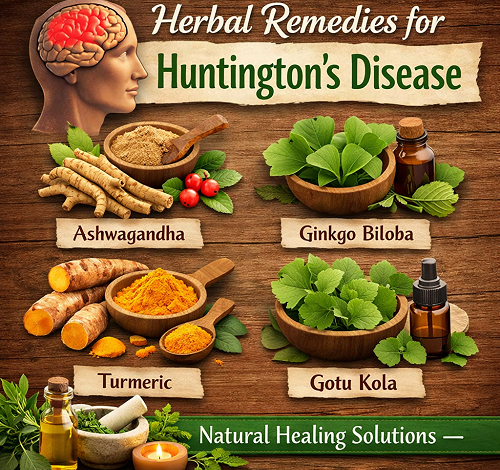
Huntington’s disease (HD) is a rare, inherited neurodegenerative disorder that progressively affects movement, cognition, and emotional well-being. While conventional medicine remains the cornerstone of diagnosis and symptom management, many individuals and caregivers explore complementary approaches to support overall neurological health. Among these, Herbal Remedies for Huntington’s Disease have gained attention for their potential to help manage oxidative stress, inflammation, mood changes, and general brain function.
How Herbal Remedies may be used as supportive options alongside standard medical care. It focuses on evidence-informed herbs, lifestyle integration, safety considerations, and realistic expectations—without claiming a cure.
Understanding Huntington’s Disease and Neurological Decline
Huntington’s disease is caused by a genetic mutation that leads to the gradual breakdown of nerve cells, particularly in the basal ganglia and cerebral cortex. This degeneration contributes to hallmark symptoms such as involuntary movements (chorea), muscle rigidity, difficulty speaking or swallowing, memory decline, depression, anxiety, and personality changes.
From a biological perspective, several processes are implicated in HD progression:
- Oxidative stress damaging neurons
- Neuroinflammation accelerating cell loss
- Mitochondrial dysfunction reducing cellular energy
- Neurotransmitter imbalance affecting mood and movement
Because many medicinal herbs contain antioxidant, anti-inflammatory, and neuroprotective compounds, interest has grown in their supportive role for neurological conditions, including HD.
Why People Consider Herbal Remedies for Huntington’s Disease
Individuals living with HD and their families often seek complementary strategies to improve quality of life. Herbal Remedies for Huntington’s Disease are commonly explored for the following reasons:
- Natural neuroprotection: Certain herbs are rich in polyphenols and flavonoids that help combat oxidative stress.
- Mood and emotional support: Depression, anxiety, and irritability are common in HD; some herbs may help promote emotional balance.
- Inflammation control: Chronic neuroinflammation is a key factor in disease progression.
- Overall wellness: Herbal approaches often align with holistic lifestyle changes, including diet and stress management.
It is important to emphasize that Herbal Remedies are not a replacement for prescribed treatments. Instead, they may act as complementary supports when used responsibly under medical supervision.
Key Herbal Remedies That May Support Neurological Function
1. Ginkgo Biloba
Ginkgo biloba is one of the most researched herbs for brain health. Traditionally used to enhance memory and circulation, it contains flavonoids and terpenoids known for antioxidant properties.
Potential benefits:
- Supports cerebral blood flow
- Helps neutralize free radicals
- May assist with cognitive clarity
In the context of Herbal Remedies for Huntington’s Disease, ginkgo is often discussed for its possible role in protecting neurons from oxidative damage.
2. Turmeric (Curcumin)
Turmeric’s active compound, curcumin, is widely recognized for its strong anti-inflammatory and antioxidant effects. Neuroinflammation plays a significant role in neurodegenerative disorders, making turmeric a frequently cited option among Herbal Remedies.
Potential benefits:
- Reduces inflammatory markers
- Supports mitochondrial function
- May help slow oxidative stress-related damage
Curcumin is better absorbed when taken with black pepper (piperine) or healthy fats.
3. Ashwagandha (Withania somnifera)
Ashwagandha is an adaptogenic herb used in traditional Ayurvedic medicine. It is valued for its ability to help the body adapt to stress and support nervous system balance.
Potential benefits:
- Supports stress response and cortisol balance
- May help with anxiety and sleep disturbances
- Shows neuroprotective properties in early research
For individuals dealing with the emotional and psychological burden of HD, ashwagandha is often considered among supportive Herbal Remedies for Huntington’s Disease.
4. Bacopa Monnieri
Bacopa is traditionally used to enhance memory and cognitive function. It contains bacosides, compounds believed to support neuron communication and reduce oxidative stress.
Potential benefits:
- Supports learning and memory
- May protect brain cells from damage
- Helps reduce anxiety and mental fatigue
Bacopa is typically used long-term, as its effects build gradually.
5. Green Tea (Camellia sinensis)
Green tea is rich in catechins, especially epigallocatechin gallate (EGCG), which has been studied for its antioxidant and neuroprotective properties.
Potential benefits:
- Reduces oxidative stress
- Supports overall brain health
- May help regulate inflammation
Regular consumption of green tea is one of the simplest Herbal Remedies to incorporate into daily life.
6. Gotu Kola (Centella asiatica)
Gotu kola has a long history of use in traditional medicine for cognitive and circulatory support.
Potential benefits:
- Supports nerve regeneration
- Enhances circulation to the brain
- May help reduce mental fatigue
This herb is often used in combination with others for broader neurological support.
How Herbal Remedies May Work Together
Rather than relying on a single herb, many holistic practitioners emphasize synergistic use. Combining multiple Herbal Remedies at appropriate doses may provide broader support by targeting different mechanisms:
- Antioxidants (ginkgo, green tea)
- Anti-inflammatory agents (turmeric)
- Adaptogens (ashwagandha)
- Cognitive enhancers (bacopa, gotu kola)
However, combining herbs increases the importance of professional guidance to avoid interactions and ensure safety.
Lifestyle Practices That Enhance the Effects of Herbal Remedies
Herbs are most effective when paired with supportive lifestyle habits. For those exploring Herbal Remedies for Huntington’s Disease, the following strategies may help maximize benefits:
Brain-Supportive Nutrition
- Diet rich in fruits, vegetables, omega-3 fatty acids, and whole grains
- Reduced intake of processed foods and refined sugars
Gentle Physical Activity
- Low-impact exercises like walking, stretching, or yoga
- Helps maintain mobility, circulation, and mood
Stress Management
- Meditation, deep breathing, or mindfulness practices
- Chronic stress can worsen neurological symptoms
Consistent Sleep Routine
- Quality sleep supports brain repair and emotional balance
Safety Considerations and Precautions
While Herbal Remedies are natural, they are not automatically safe for everyone. When considering Herbal Remedies for Huntington’s Disease, keep these points in mind:
- Consult a healthcare provider before starting any herb, especially if taking medications.
- Some herbs may interact with antidepressants, antipsychotics, or blood thinners.
- Start with low doses and monitor for side effects.
- Use standardized, high-quality products from reputable manufacturers.
- Avoid self-treatment during advanced stages without professional supervision.
Pregnant or breastfeeding individuals and those with other chronic conditions should be especially cautious.
What Herbal Remedies Can and Cannot Do
It is essential to maintain realistic expectations. Herbal Remedies for Huntington’s Disease:
Can:
- Support general neurological health
- Help manage stress, mood, and inflammation
- Complement conventional therapies
Cannot:
- Cure Huntington’s disease
- Replace prescribed medications
- Stop genetic progression of the disorder
A balanced approach that respects both medical science and holistic wellness offers the best path forward.
Ongoing Research and the Future of Herbal Support
Scientific interest in plant-based neuroprotective compounds continues to grow. Researchers are studying how antioxidants, polyphenols, and adaptogens may influence neurodegenerative processes. While large-scale clinical trials specific to HD are limited, early findings from related neurological research provide a foundation for cautious optimism.
As research evolves, Herbal Remedies may become more precisely integrated into supportive care plans—always alongside evidence-based medical treatment.
Final Thoughts
Living with Huntington’s disease presents complex physical, emotional, and neurological challenges. While there is currently no cure, a comprehensive care strategy can make a meaningful difference in quality of life. Herbal Remedies for Huntington’s Disease, when used responsibly, may offer gentle support for neurological function, emotional balance, and overall wellness.
By combining Herbal Remedies with medical care, healthy lifestyle choices, and professional guidance, individuals and caregivers can take proactive steps toward supportive, holistic management—focused not on false promises, but on informed, compassionate care.