Herbal Remedies for Yaws: Natural Treatments to Support Faster Skin Recovery

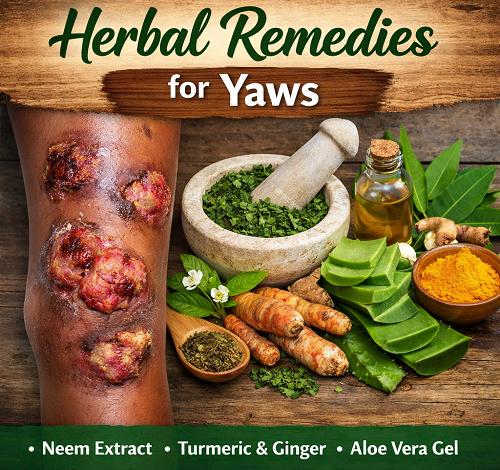
Yaws is a neglected tropical infection that mainly affects the skin, bones, and joints of children living in warm, humid regions. Though modern antibiotics remain the primary medical treatment, many people look for supportive natural options to ease symptoms and promote skin healing. Herbal Remedies for Yaws, how they may support recovery, and the safest ways to use them alongside conventional care.
Understanding Yaws
Yaws is a chronic bacterial infection caused by Treponema pallidum pertenue, a close relative of the bacteria that causes syphilis. It spreads through direct skin contact with the fluid from infectious lesions. The disease primarily affects children in rural areas of Africa, Southeast Asia, the Pacific Islands, and parts of Latin America.
Symptoms of Yaws
Yaws progresses in stages:
- Primary Stage – A painless skin sore (called a “mother yaw”) appears at the site of infection.
- Secondary Stage – Multiple skin rashes, lesions, and bone pain may develop.
- Latent Stage – Symptoms temporarily disappear.
- Tertiary Stage – Severe deformities of the skin and bones can occur if left untreated.
Although antibiotics such as azithromycin are the gold standard treatment, Herbal Remedies for Yaws may help support skin repair, reduce inflammation, and improve overall immunity.
Why Consider Herbal Remedies for Yaws?
While antibiotics eliminate the bacteria, the skin often needs time to regenerate. Many Herbal Remedies offer:
- Anti-inflammatory properties
- Antibacterial support
- Immune system enhancement
- Faster wound healing
- Reduced itching and irritation
However, it is crucial to understand that Herbal Remedies for Yaws should never replace prescribed antibiotics. They are best used as complementary support.
Top Herbal Remedies for Yaws to Support Skin Recovery
1. Neem (Azadirachta indica)
Neem is widely known in traditional medicine systems for its antibacterial and antifungal properties.
Benefits:
- Helps cleanse infected skin
- Reduces inflammation
- Supports wound healing
- May prevent secondary infections
How to Use:
- Apply diluted neem oil directly to lesions.
- Use neem leaf paste on affected areas.
- Bathe in neem-infused water for whole-body support.
Neem is one of the most powerful Herbal Remedies for Yaws for external application.
2. Turmeric (Curcuma longa)
Turmeric contains curcumin, a potent anti-inflammatory and antioxidant compound.
Benefits:
- Reduces redness and swelling
- Supports tissue regeneration
- May reduce bacterial growth
- Boosts immune function
How to Use:
- Mix turmeric powder with coconut oil to form a paste.
- Apply to lesions once daily.
- Drink turmeric milk to support internal healing.
Turmeric stands out among Herbal Remedies due to its powerful skin-soothing properties.
3. Aloe Vera (Aloe barbadensis miller)
Aloe vera is famous for calming irritated skin.
Benefits:
- Cools inflamed lesions
- Accelerates wound healing
- Hydrates damaged skin
- Reduces itching
How to Use:
- Apply fresh aloe gel directly to sores.
- Use twice daily for best results.
Aloe vera is one of the safest Herbal Remedies for Yaws, especially for children.
4. Garlic (Allium sativum)
Garlic contains allicin, a natural antimicrobial compound.
Benefits:
- Fights bacteria
- Boosts immune defense
- Supports detoxification
How to Use:
- Consume raw garlic in small amounts.
- Mix crushed garlic with coconut oil for topical use (test first for sensitivity).
Garlic enhances the immune-supportive side of Herbal Remedies for Yaws.
5. Calendula (Calendula officinalis)
Calendula is widely used for skin healing.
Benefits:
- Speeds wound closure
- Reduces inflammation
- Promotes healthy tissue growth
How to Use:
- Apply calendula ointment to affected areas.
- Use 1–2 times daily.
Calendula is one of the gentlest Herbal Remedies for sensitive skin.
6. Tea Tree Oil (Melaleuca alternifolia)
Tea tree oil has strong antimicrobial properties.
Benefits:
- Helps control bacterial spread
- Reduces skin irritation
- Prevents secondary infections
How to Use:
- Dilute with a carrier oil (coconut or olive oil).
- Apply lightly once daily.
Always dilute tea tree oil to avoid skin irritation.
Internal Herbal Support for Yaws Recovery
Healing skin requires a strong immune system. Alongside topical care, internal Herbal Remedies may support recovery:
1. Echinacea
Boosts immune response and may help fight infection.
2. Ginger
Reduces inflammation and supports circulation.
3. Holy Basil (Tulsi)
Enhances immune resilience and reduces oxidative stress.
Lifestyle Tips to Complement Herbal Remedies for Yaws
Natural healing works best when combined with good hygiene and nutrition.
1. Maintain Skin Cleanliness
- Wash lesions gently with mild soap.
- Keep affected areas dry.
2. Improve Nutrition
- Increase intake of vitamin C-rich foods.
- Eat zinc-rich foods for wound healing.
- Stay hydrated.
3. Avoid Scratching
Scratching can worsen infection and spread bacteria.
4. Complete Antibiotic Treatment
Even when using Herbal Remedies for Yaws, complete the prescribed antibiotic course.
Safety Considerations
While Herbal Remedies are natural, they are not risk-free.
✔ Always perform a patch test before applying herbs topically.
✔ Consult a healthcare provider before giving herbs to children.
✔ Avoid mixing multiple strong essential oils.
✔ Stop use if irritation occurs.
Pregnant or breastfeeding women should consult a professional before using herbal treatments.
Can Herbal Remedies Cure Yaws?
It is important to clarify:
Herbal Remedies for Yaws cannot cure the bacterial infection.
Only antibiotics can eliminate Treponema pallidum pertenue. However, Herbal Remedies may:
- Speed up skin recovery
- Reduce discomfort
- Support immune function
- Improve overall healing
They serve as supportive care rather than primary treatment.
Frequently Asked Questions
- How long does skin take to heal after antibiotic treatment?
Most lesions begin healing within weeks, but full recovery may take several months.
- Are Herbal Remedies safe for children?
Some, like aloe vera and calendula, are generally safe. Strong essential oils require caution.
- Can herbal baths help?
Yes, neem or calendula-infused baths may soothe widespread lesions.
Final Thoughts
Yaws remains a serious but treatable infection. While antibiotics are essential to eliminate the bacteria, natural options can help soothe damaged skin and strengthen the body’s defenses.
Herbal Remedies for Yaws such as neem, turmeric, aloe vera, calendula, and garlic provide valuable supportive benefits for faster skin recovery. When used responsibly and alongside medical treatment, these Herbal Remedies can enhance comfort and promote healthier healing.
If you or your child experiences persistent skin sores, seek medical care promptly. Early diagnosis and proper treatment prevent complications and long-term damage.