
Acidity is one of the most common digestive complaints affecting people of all ages. Characterized by a burning sensation in the chest or throat, acidity can interfere with daily life, especially after meals. While medications can provide relief, dietary changes often play a pivotal role in managing symptoms naturally. Understanding which foods help relieve acidity fast and implementing the best diet tips can make a significant difference in your digestive health and overall comfort.
The foods that can quickly ease acidity, provide essential lifestyle adjustments, and share actionable best diet tips to prevent acid reflux and maintain a healthy digestive system.
Understanding Acidity and Its Causes
Before diving into the foods that help relieve acidity fast, it is crucial to understand what acidity is and why it occurs. Acidity, also known as acid reflux or heartburn, happens when stomach acid flows back into the esophagus. This causes irritation, discomfort, and the classic burning sensation in the chest.
Common causes of acidity include:
- Overeating: Consuming large meals can increase stomach pressure, forcing acid upward.
- Spicy and fatty foods: Foods high in spices or fat can relax the lower esophageal sphincter, making reflux more likely.
- Caffeine and carbonated beverages: These can increase acid production in the stomach.
- Stress: Stress may increase acid secretion and sensitivity of the esophagus.
- Lifestyle habits: Smoking, alcohol consumption, and lying down immediately after eating can trigger acidity.
By targeting the root causes and modifying your diet, you can manage acidity more effectively and reduce the need for medication.
Top Foods That Help Relieve Acidity Fast
Choosing the right foods can provide almost immediate relief from acidity. Below is a detailed list of foods known for their soothing effect on the stomach and their ability to reduce acid reflux.
1. Oatmeal
Oatmeal is a high-fiber, low-fat food that absorbs stomach acid and reduces symptoms of reflux. Starting your day with oatmeal can provide long-lasting relief and prevent acidity throughout the morning. Avoid instant oatmeal with added sugar or flavorings, as sugar can sometimes aggravate acid reflux.
2. Bananas
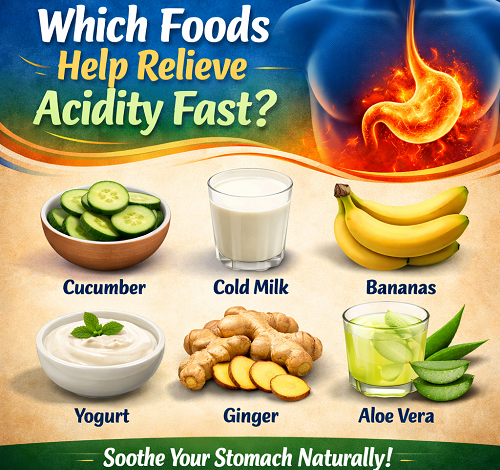
Bananas are naturally low in acid and can coat the lining of the stomach, acting as a buffer against stomach acid. Eating a ripe banana when acidity strikes can provide quick relief. They also contain potassium, which helps maintain a healthy acid-base balance in the stomach.
3. Ginger
Ginger has long been used as a natural remedy for digestive issues. Its anti-inflammatory properties can help soothe the stomach and reduce acid reflux. Fresh ginger, ginger tea, or small amounts of grated ginger in meals can ease discomfort quickly.
4. Yogurt
Yogurt contains probiotics, which are beneficial bacteria that improve gut health and digestion. Eating plain, unsweetened yogurt can neutralize stomach acid and promote a healthier digestive environment. Avoid flavored yogurts with added sugars or artificial sweeteners, as these may worsen acidity.
5. Green Vegetables
Vegetables such as spinach, broccoli, cucumber, and asparagus are alkaline and can help reduce stomach acidity. Their high fiber content also aids digestion and prevents bloating. Incorporating green vegetables into your meals ensures a steady supply of essential nutrients without aggravating acid reflux.
6. Melons
Melons, including cantaloupe and honeydew, are low-acid fruits that are gentle on the stomach. They are hydrating and can relieve the burning sensation caused by acidity. Eating small portions of melon between meals can provide ongoing relief.
7. Fennel Seeds
Fennel seeds have natural antacid properties. Chewing fennel seeds after meals can prevent acid reflux and promote smooth digestion. You can also make fennel tea by boiling the seeds in water, which can offer quick relief from acidity.
8. Almonds
Almonds are alkaline nuts that can help neutralize stomach acid. Eating a small handful of raw almonds after meals can reduce acidity and soothe the digestive system. Avoid salted or roasted almonds, as excess salt and oil may worsen acid reflux.
9. Chamomile Tea
Chamomile tea has anti-inflammatory properties that calm the stomach lining and reduce acid production. Drinking a cup of chamomile tea 30 minutes before bedtime can prevent nighttime acidity and aid digestion.
10. Coconut Water
Coconut water is a natural hydrator and helps balance stomach acid. It is a soothing drink that can be consumed during the day to ease burning sensations caused by acidity.
Best Diet Tips to Prevent and Manage Acidity
In addition to including specific foods in your diet, certain eating habits can drastically reduce acid reflux and provide quick relief. Here are some best diet tips that complement the consumption of acid-relieving foods:
1. Eat Smaller, Frequent Meals
Large meals increase stomach pressure and the likelihood of acid reflux. Eating smaller, more frequent meals throughout the day helps the stomach digest food more efficiently and prevents acid buildup.
2. Avoid Trigger Foods
Identify foods that worsen your acidity and limit or avoid them. Common triggers include:
- Fried or greasy foods
- Spicy dishes
- Citrus fruits like oranges and lemons
- Tomato-based products
- Caffeine and carbonated drinks
- Chocolate
- Alcohol
3. Maintain Proper Meal Timing
Avoid lying down immediately after eating. Wait at least 2–3 hours before lying down or going to bed. This allows the stomach to digest food properly and reduces the risk of acid reflux.
4. Stay Hydrated, But Wisely
Drinking water throughout the day can help dilute stomach acid, but avoid drinking large amounts during meals as it can increase stomach pressure. Sip water between meals instead.
5. Include Fiber-Rich Foods
High-fiber foods like whole grains, vegetables, and legumes improve digestion and reduce acid reflux. Fiber also promotes regular bowel movements, preventing constipation that can aggravate acidity.
6. Limit Fat Intake
Fatty foods relax the lower esophageal sphincter, increasing acid reflux risk. Opt for lean proteins such as fish, chicken, or legumes, and choose healthy fats from sources like olive oil or avocado in moderation.
7. Chew Food Thoroughly
Chewing food properly reduces the workload on your stomach and facilitates smoother digestion. Eating slowly also helps prevent overeating, which is a common cause of acidity.
8. Maintain a Healthy Weight
Excess weight puts pressure on the stomach, pushing acid into the esophagus. Maintaining a healthy weight through balanced diet and regular exercise can significantly reduce acidity episodes.
9. Use Natural Remedies
In addition to foods that help relieve acidity fast, herbal remedies like licorice root, slippery elm, and aloe vera juice can protect the stomach lining and soothe reflux symptoms.
10. Track Food and Symptoms
Keeping a food diary helps identify personal triggers. Note what you eat, when acidity occurs, and any other symptoms. This information allows you to make informed dietary adjustments for better acid control.
Sample Acid-Friendly Meal Plan
For practical implementation, here’s a sample meal plan that incorporates foods that help relieve acidity fast and follows best diet tips:
Breakfast:
- Oatmeal with sliced bananas and a handful of almonds
- Herbal tea or chamomile tea
Mid-Morning Snack:
- Fresh melon or apple slices
- Coconut water
Lunch:
- Grilled chicken or tofu
- Steamed broccoli, spinach, and carrots
- Brown rice or quinoa
Afternoon Snack:
- Yogurt with a sprinkle of fennel seeds
- Green tea (unsweetened)
Dinner:
- Baked fish or lentil soup
- Mixed green salad with cucumber and olive oil dressing
- A small serving of whole wheat bread
Before Bed:
- Chamomile tea or warm water with a teaspoon of aloe vera juice
Lifestyle Habits to Enhance Acid Relief
Diet alone is not always enough. Combining healthy eating with lifestyle adjustments maximizes relief and prevents recurrent acidity:
- Elevate Your Head While Sleeping: Sleeping with your head elevated can prevent acid from flowing into the esophagus at night.
- Wear Loose Clothing: Tight clothes put pressure on your abdomen and worsen acid reflux.
- Exercise Regularly: Moderate exercise improves digestion and helps maintain a healthy weight. Avoid intense exercise immediately after meals.
- Manage Stress: Stress can increase acid production. Techniques like meditation, yoga, or deep-breathing exercises can reduce acidity episodes.
When to Seek Medical Advice
Most cases of acidity can be managed with dietary and lifestyle adjustments. However, persistent or severe symptoms may indicate an underlying condition such as gastroesophageal reflux disease (GERD), ulcers, or gastritis. Consult a healthcare professional if you experience:
- Difficulty swallowing
- Unexplained weight loss
- Persistent chest pain
- Vomiting blood or black stools
Early intervention can prevent complications and ensure proper treatment.
Conclusion
Acidity is uncomfortable, but it is highly manageable with the right dietary choices and habits. Incorporating foods that help relieve acidity fast, such as oatmeal, bananas, yogurt, green vegetables, and fennel seeds, can provide quick comfort. Coupled with best diet tips like eating smaller meals, avoiding triggers, and maintaining proper meal timing, you can prevent acid reflux and protect your digestive health.
By following these dietary and lifestyle recommendations, you can enjoy relief from acidity naturally, reduce dependence on medications, and improve overall quality of life. Remember, consistency is key—making small, sustainable changes can result in long-term digestive comfort and well-being.