
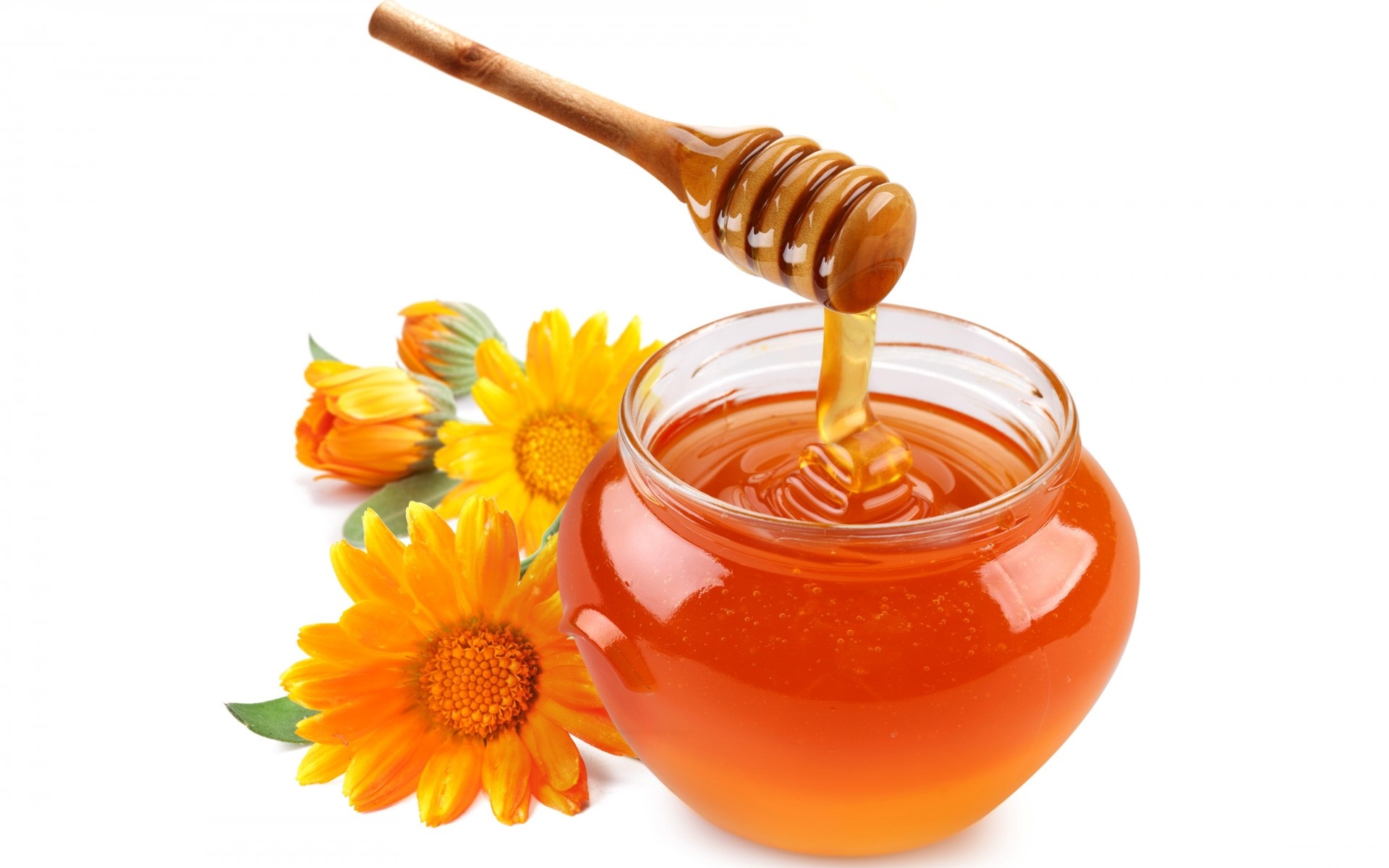
Honey’s often thought of as a healthier sweetener, but you might be surprised to learn that this ingredient has tons of skin and hair benefits, too. Made by the alchemy of bees collecting nectar, pollen, and resins from flowers, honey can help moisturize, fight aging, and fight bacteria. Plus, it’s loaded with nutrients, antioxidants, and healing compounds. Next time you’re browsing the grocery store shelves, look for raw honey, which hasn’t been heat-treated or pasteurized; it contains more active phytonutrient antioxidants and enzymes for enhanced benefits. Here are a few ways to put the ingredient to use (sometimes with the help of some other natural ingredients).
1. Moisturizing Mask
Honey is a natural humectant, meaning it draws moisture from the air into the skin and ensures it’s retained it in the layers where it’s needed most for penetrating, long-lasting hydration.
Try it: Spread one teaspoon raw honey on clean, dry skin, and let sit for 15-20 minutes. Rinse with tepid water.
2. Pore Cleanser
The enzymes in raw honey clarify skin and keep pores clear and clean. Plus, the antibacterial properties of honey and jojoba or coconut oil also prevent bacterial buildup that can lead to skin imbalances and breakouts.
Try it: Stir one tablespoon raw honey with two tablespoons jojoba oil or coconut oil until the mixture is spreadable consistency. Apply to clean, dry skin, and massage gently in a circular motion, avoiding your eye area. Rinse with tepid water.
3. Gentle Exfoliator
Honey is loaded with antioxidants, enzymes, and other nutrients that nourish, cleanse, and hydrate skin. Baking soda, meanwhile, is a gentle natural exfoliator that removes dead skin cells, allowing new cells to emerge for a radiant complexion.
Try it: Mix two tablespoons honey with one tablespoon baking soda. Splash your skin with water, then gently rub the concoction on your face or body in a circular motion. Rinse well.
4. Scar Fader
Honey is said to lighten skin, and its anti-inflammatory and antibacterial compounds help to decrease the appearances of scars and increase healing and tissue regeneration. The hydrating properties of honey and coconut oil or olive oil will also help revive skin cells, while regular, gentle massaging will increase circulation to aid skin recovery and cell turnover.
Try it: Mix one teaspoon raw honey with one teaspoon coconut oil or olive oil. Apply to the affected area, and massage with the tips of your fingers in a circular motion for one to two minutes. Place a hot washcloth over your skin, and let sit until cool. Repeat daily.
5. Acne Treatment
Honey contains antibacterial and anti fungal properties that thwart bacteria that can lead to breakouts. Its anti-inflammatory properties will calm redness and irritation.
Try it: Apply a dab of raw honey to affected areas, and sit for 10-15 minutes. Rinse with tepid water.
6. Bath Soak
Honey’s not just hydrating; its antioxidants will repair skin and protect it against oxidative and environmental damage.
Try it: Mix two heaping tablespoons raw honey with one cup hot water until dissolved. Add to a tub of warm water, and soak.
7. Cuticle Moisturizer
Raw honey is loaded with nutrients and enzymes to nourish and heal skin, and it’s a natural humectant, meaning it draws moisture into the skin. Coconut oil conditions and protects, while the acetic acid in apple cider vinegar softens hard skin and balances pH for healthy growth.
Try it: Mix one teaspoon honey with one teaspoon apple cider vinegar and one teaspoon coconut oil. Rub over each cuticle, and let sit five to 10 minutes, then rinse.
8. Hair Conditioner
The enzymes and nutrients in raw honey give dull hair shine without weighing it down. Coconut oil penetrates the hair shaft to condition and smooth the cuticle and give your strands the luster you crave.
Try it: Mix one tablespoon raw honey with two tablespoons coconut oil. Apply thoroughly to the bottom two-thirds of damp hair, starting at the ends and working up. Let sit for 20 minutes, and rinse well.
9. Shampoo Booster
The humectant properties of honey help regulate and retain moisture in hair, plus honey is said to strengthen hair follicles for healthy growth.
Try it: Mix one teaspoon honey with a dime-sized amount of your favorite shampoo. Wash and lather as normal, and rinse well.
10. Hair Highlighter
The enzyme glucose oxidase in honey slowly releases hydrogen peroxide, an ingredient known to lighten hair color.
Try it: Mix three tablespoons honey with two tablespoon water. Apply to clean, damp hair, and let sit for an hour. Rinse well. Apply weekly for best results.
11. Sunburn Treatment
Honey restores hydration to the deepest layers of sun-exposed skin—and both honey and aloe vera contain powerful anti-inflammatories to calm burned skin and aid recovery.
Try it: Mix one part raw honey with two parts pure aloe vera gel. Apply to sunburned skin.
Source: Women’s Health
By : Natural Health News