

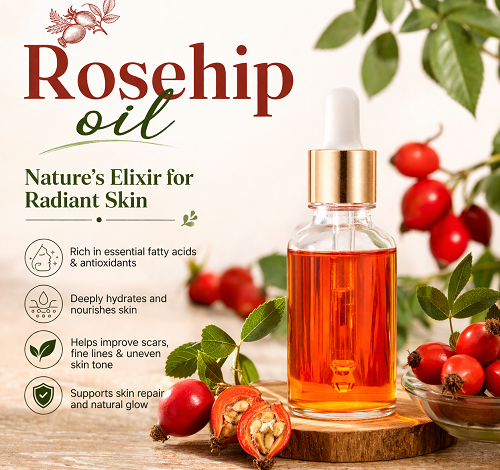
Rosehip oil has gained immense popularity in the world of natural skincare and wellness. Extracted from the seeds of wild rose bushes, particularly Rosa canina, this nutrient-rich oil is celebrated for its powerful healing, anti-aging, and moisturizing properties. Whether you are dealing with dry skin, scars, or simply looking for a natural glow, rosehip oil has something to offer. The Uses of Rosehip oil, dive into the Benefits of Rosehip oil, and uncover the Side Effects of Rosehip oil so you can make an informed decision before incorporating it into your routine.
What is Rosehip Oil?
Rosehip oil is derived from the fruit and seeds of the rose plant, often referred to as “rose hips.” Unlike rose essential oil, which is extracted from petals, rosehip oil is cold-pressed from seeds, preserving its rich nutrient content.
This oil is packed with:
- Essential fatty acids (Omega-3 and Omega-6)
- Vitamins A, C, and E
- Antioxidants
- Anti-inflammatory compounds
These components make it highly beneficial for both skin and overall health.
Nutritional Composition of Rosehip Oil
Understanding the composition of rosehip oil helps explain its effectiveness:
- Vitamin A (Retinol): Promotes skin cell turnover and reduces signs of aging
- Vitamin C: Brightens skin and boosts collagen production
- Vitamin E: Protects against environmental damage
- Linoleic Acid: Helps maintain skin barrier function
- Oleic Acid: Deeply moisturizes and nourishes skin
Uses of Rosehip Oil
The Uses of Rosehip oil are diverse, ranging from skincare to haircare and even medicinal applications. Below are some of the most popular and effective uses:
1. Skincare Routine Essential
Rosehip oil is widely used as a daily moisturizer. It absorbs quickly into the skin without leaving a greasy residue, making it ideal for all skin types.
2. Anti-Aging Treatment
Due to its high retinol content, rosehip oil helps reduce wrinkles, fine lines, and age spots.
3. Scar and Stretch Mark Reduction
It is commonly used to fade scars, including acne scars and stretch marks, by promoting skin regeneration.
4. Acne Management
Despite being an oil, it helps balance natural oil production and reduces acne breakouts.
5. Hyperpigmentation Treatment
Rosehip oil helps lighten dark spots and even out skin tone over time.
6. Hair Care
It nourishes the scalp, reduces dandruff, and adds shine to hair.
7. Nail and Cuticle Care
Regular application strengthens nails and softens cuticles.
8. Massage Oil
Its anti-inflammatory properties make it ideal for soothing sore muscles.
Benefits of Rosehip Oil
The Benefits of Rosehip oil go beyond basic skincare. Let’s explore its advantages in detail:
1. Deep Hydration
Rosehip oil penetrates deeply into the skin providing long-lasting moisture without clogging pores.
2. Anti-Aging Properties
Rich in antioxidants, it helps combat free radicals, reducing signs of aging such as wrinkles and fine lines.
3. Skin Regeneration
It boosts collagen production and accelerates skin cell turnover, helping repair damaged skin.
4. Improves Skin Tone
Regular use leads to brighter, more even-toned skin.
5. Reduces Inflammation
Its anti-inflammatory properties help soothe conditions like eczema, rosacea, and dermatitis.
6. Fades Scars and Marks
It significantly reduces the appearance of scars, burns, and stretch marks over time.
7. Protects Against Sun Damage
While not a sunscreen, it helps repair damage caused by UV exposure.
8. Supports Hair Health
It strengthens hair follicles and prevents dryness and breakage.
9. Boosts Immunity (Topical Support)
The antioxidants present may support the skin’s defense system.
10. Non-Comedogenic
It does not clog pores, making it suitable for oily and acne-prone skin.
How to Use Rosehip Oil
To maximize the Uses of Rosehip oil, it’s important to apply it correctly:
For Face:
- Cleanse your face thoroughly
- Apply 2–3 drops of rosehip oil
- Gently massage into the skin
- Use twice daily for best results
For Hair:
- Apply a small amount to your scalp
- Massage gently
- Leave for 30 minutes or overnight before washing
For Scars:
- Apply directly to the affected area
- Massage twice daily
For Nails:
- Rub a drop into nails and cuticles daily
Side Effects of Rosehip Oil
While generally safe, it’s important to understand the Side Effects of Rosehip oil to avoid potential issues.
1. Allergic Reactions
Some individuals may experience redness, itching, or irritation. Always perform a patch test before use.
2. Acne Breakouts (Rare Cases)
Though non-comedogenic, excessive use may cause breakouts in sensitive individuals.
3. Skin Sensitivity
Due to vitamin A content, it may increase sensitivity to sunlight.
4. Interaction with Medications
If taken internally (which is rare), it may interact with certain medications.
5. Pregnancy Concerns
Consult a healthcare provider before use during pregnancy.
Who Should Use Rosehip Oil?
Rosehip oil is suitable for:
- People with dry or aging skin
- Individuals dealing with scars or stretch marks
- Those looking for natural skincare solutions
However, individuals with extremely sensitive or allergy-prone skin should proceed with caution.
Tips for Choosing High-Quality Rosehip Oil
To enjoy the full Benefits of Rosehip oil, ensure you select the right product:
- Choose cold-pressed oil
- Look for organic certification
- Opt for dark glass bottles to preserve quality
- Avoid products with added chemicals or fragrances
Rosehip Oil vs Other Oils
Rosehip Oil vs Argan Oil
- Rosehip oil is better for anti-aging and scars
- Argan oil is more suitable for deep hydration
Rosehip Oil vs Coconut Oil
- Rosehip oil is lighter and non-comedogenic
- Coconut oil is heavier and may clog pores
DIY Recipes Using Rosehip Oil
1. Anti-Aging Serum
- 1 tbsp rosehip oil
- 2 drops vitamin E oil
- 2 drops lavender essential oil
Mix and apply nightly.
2. Hair Repair Mask
- 2 tbsp rosehip oil
- 1 tbsp coconut oil
Apply to hair and leave for 1 hour before washing.
3. Scar Healing Blend
- 1 tbsp rosehip oil
- 2 drops tea tree oil
Apply directly to scars twice daily.
Frequently Asked Questions
Is rosehip oil suitable for oily skin?
Yes, it helps balance oil production and does not clog pores.
Can I use it daily?
Absolutely. It is safe for daily use when applied in small amounts.
How long does it take to see results?
Visible improvements may appear within 2–4 weeks of consistent use.
Can it replace moisturizer?
Yes, especially for normal to dry skin types.
Conclusion
Rosehip oil is a powerful natural remedy with a wide range of applications. From improving skin texture and reducing scars to nourishing hair and protecting against environmental damage, its versatility makes it a must-have in any beauty routine.
Understanding the Uses of Rosehip oil, appreciating the Benefits of Rosehip oil, and being aware of the Side Effects of Rosehip oil will help you use it safely and effectively. When chosen and applied correctly, rosehip oil can transform your skincare and wellness routine naturally.