Natural Remedies for Dry Eyes to Soothe Irritation and Redness Naturally

Dry eyes are a common yet often underestimated condition that can significantly affect daily comfort, productivity, and overall eye health. Characterized by irritation, redness, burning, itching, and a gritty sensation, dry eyes occur when your eyes don’t produce enough tears or when the tears evaporate too quickly. While artificial eye drops and medications are commonly prescribed, many people are now turning toward natural remedies for dry eyes as a safer, long-term approach to relief.
The causes of dry eyes, how lifestyle and environmental factors contribute to the problem, and the most effective natural remedies for dry eyes that can help soothe irritation and redness naturally.
Understanding Dry Eyes: Why Do They Happen?
Before diving into natural solutions, it’s essential to understand what causes dry eyes.
Common Causes of Dry Eyes
- Prolonged screen time (digital eye strain)
- Aging and hormonal changes
- Environmental factors like wind, smoke, and air conditioning
- Poor diet lacking essential nutrients
- Dehydration
- Wearing contact lenses for extended periods
- Certain medications (antihistamines, antidepressants, blood pressure drugs)
- Medical conditions such as autoimmune disorders
When tear production decreases or tear quality is poor, the eyes lose their natural lubrication, leading to inflammation and discomfort.
Why Choose Natural Remedies for Dry Eyes?
Many people prefer natural remedies for dry eyes because they:
- Have fewer side effects
- Address root causes instead of masking symptoms
- Support overall eye and body health
- Are cost-effective and easy to follow
- Can be used long-term safely
Natural approaches focus on improving tear quality, reducing inflammation, and protecting the eyes from environmental stress.
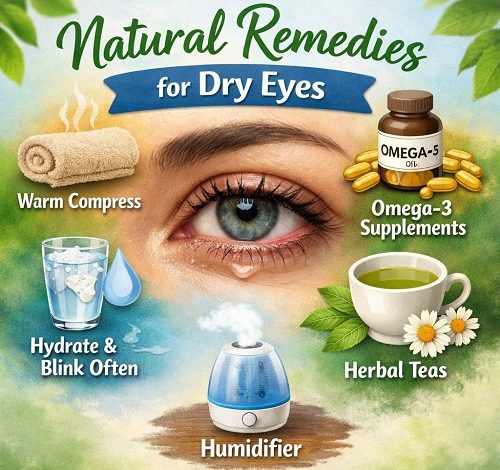
1. Warm Compress Therapy
One of the simplest and most effective natural remedies for dry eyes is using warm compresses.
How It Helps
Warm compresses help unclog the oil-producing meibomian glands in the eyelids. These oils slow tear evaporation and keep the eyes moist.
How to Use
- Soak a clean cloth in warm (not hot) water
- Wring out excess water
- Place over closed eyes for 5–10 minutes
- Repeat once or twice daily
Consistent use can significantly reduce dryness and redness.
2. Omega-3 Fatty Acids for Tear Quality
Omega-3 fatty acids are widely recognized as one of the most powerful natural remedies for dry eyes.
Benefits
- Reduce inflammation in tear glands
- Improve tear stability
- Decrease eye redness and irritation
Natural Sources
- Fatty fish (salmon, sardines, mackerel)
- Flaxseeds
- Chia seeds
- Walnuts
Including omega-3-rich foods in your daily diet can improve symptoms over time.
3. Hydration: Drink More Water
Dehydration is a silent contributor to dry eyes. When the body lacks water, tear production drops.
Tips for Better Hydration
- Drink at least 8–10 glasses of water daily
- Limit caffeine and alcohol intake
- Include water-rich foods like cucumbers and oranges
Proper hydration is a foundational yet often overlooked natural remedy for dry eyes.
4. Blink More and Practice Eye Exercises
Extended screen use reduces blinking by up to 60%, leading to faster tear evaporation.
Simple Eye Habits
- Follow the 20-20-20 rule: every 20 minutes, look 20 feet away for 20 seconds
- Practice conscious blinking
- Roll eyes gently to stimulate tear glands
These habits enhance tear distribution and reduce digital eye strain naturally.
5. Use a Humidifier
Dry indoor air worsens eye dryness, especially during winter or in air-conditioned environments.
Why It Works
Humidifiers add moisture to the air, preventing tears from evaporating too quickly.
Best Practices
- Use a humidifier in bedrooms and workspaces
- Keep humidity between 40–60%
- Clean humidifiers regularly to prevent mold
This is an effective environmental natural remedy for dry eyes.
6. Aloe Vera Gel (External Use Only)
Aloe vera is known for its soothing and anti-inflammatory properties.
Benefits
- Reduces redness
- Calms irritation around the eyes
- Supports skin hydration
How to Use
- Apply a small amount of pure aloe vera gel around the eyes (not inside)
- Massage gently and leave overnight
This natural option is especially helpful for inflammation around the eye area.
7. Rose Water for Eye Refreshment
Rose water has cooling, anti-inflammatory properties that help calm irritated eyes.
How It Helps
- Reduces redness
- Refreshes tired eyes
- Mild antibacterial effect
How to Use
- Soak cotton pads in pure rose water
- Place on closed eyes for 10 minutes
Rose water is a gentle and effective natural remedy for dry eyes, especially for redness and fatigue.
8. Cucumber Slices for Cooling Relief
Cucumbers contain antioxidants and high water content.
Benefits
- Hydrates eye area
- Reduces puffiness
- Soothes irritation naturally
Usage
- Chill cucumber slices
- Place over closed eyes for 10–15 minutes
This remedy offers instant relief from dryness and irritation.
9. Castor Oil for Nighttime Lubrication
Castor oil is thick and rich in fatty acids, making it useful for severe dryness.
How It Works
- Reduces tear evaporation
- Improves tear film stability
How to Use
- Use only pharmaceutical-grade castor oil
- Apply a tiny amount externally on eyelids before bedtime
- Do not apply directly into eyes unless advised by a professional
This is one of the stronger natural remedies for dry eyes, especially at night.
10. Vitamin A-Rich Foods for Eye Health
Vitamin A is essential for maintaining healthy tear membranes.
Natural Sources
- Carrots
- Sweet potatoes
- Spinach
- Kale
- Pumpkin
A diet rich in vitamin A supports long-term eye lubrication and comfort.
11. Reduce Screen Exposure and Blue Light
Excessive exposure to screens dries out the eyes quickly.
Natural Solutions
- Use blue light filters
- Adjust screen brightness
- Maintain proper screen distance
- Take frequent breaks
Reducing digital stress is a preventive natural remedy for dry eyes.
12. Cold Compress for Redness Relief
While warm compresses improve oil flow, cold compresses reduce inflammation.
When to Use
- Redness
- Burning sensation
- Allergic eye irritation
Alternate between warm and cold compresses depending on symptoms.
13. Herbal Teas for Eye Comfort
Certain herbal teas help reduce inflammation internally.
Best Options
- Chamomile tea
- Green tea
- Fennel tea
Drinking these regularly can support eye health naturally.
14. Proper Sleep and Eye Rest
Lack of sleep prevents the eyes from repairing themselves.
Tips
- Sleep 7–9 hours daily
- Avoid screens before bedtime
- Use eye masks to reduce dryness at night
Quality rest is one of the most underrated natural remedies for dry eyes.
Lifestyle Changes That Support Natural Remedies for Dry Eyes
To get lasting results, combine remedies with healthy habits:
- Avoid smoking and second-hand smoke
- Wear sunglasses outdoors
- Limit contact lens use
- Maintain a balanced diet
- Manage stress levels
Consistency is key to long-term relief.
When to See a Doctor
While natural remedies for dry eyes are effective for mild to moderate cases, consult an eye specialist if:
- Symptoms persist or worsen
- Vision becomes blurry
- Severe pain or discharge occurs
Early intervention prevents complications.
Final Thoughts
Dry eyes can be uncomfortable, frustrating, and disruptive, but relief doesn’t always require medications or harsh treatments. With the right combination of diet, lifestyle changes, and natural remedies for dry eyes, you can soothe irritation, reduce redness, and restore comfort naturally.
By addressing the root causes—whether dehydration, inflammation, or environmental stress—you empower your eyes to heal and function optimally. Start small, stay consistent, and let nature support your eye health the way it was meant to.