
CDC Votes for New Infant Hepatitis B Vaccine Guidelines, Ending Decades of Old Policy

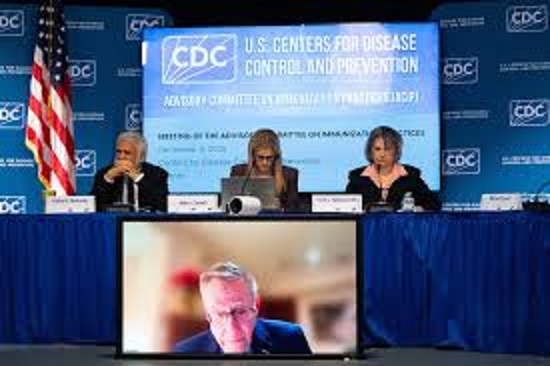
In a dramatic policy shift that has already set off intense debate across medicine, public health and politics, the Centers for Disease Control and Prevention’s Advisory Committee on Immunization Practices (ACIP) voted on December 5, 2025 to change long-standing guidance on hepatitis B vaccination for newborns. By an 8–3 vote, the committee moved away from the universal “birth dose for all newborns” recommendation that has been in place since 1991 and instead endorsed individualized, shared decision-making for most infants — keeping a birth dose recommended only for infants born to women who test positive for hepatitis B or whose status is unknown. The change, which still must be reviewed by CDC leadership before becoming official federal policy, represents one of the most consequential reversals in U.S. vaccine guidance in decades.
What changed — the mechanics of the vote
For more than 30 years, CDC guidance has recommended that all infants receive a dose of hepatitis B vaccine within 24 hours of birth. That birth dose has acted as a safety net: it lowers the risk of an infant acquiring hepatitis B from an infected mother (perinatal transmission) and guards against infections that can occur when maternal testing fails, is delayed, or when a mother acquires infection late in pregnancy. The ACIP voted to remove the universal birth-dose recommendation for infants born to women who test negative for hepatitis B; in those cases the committee now recommends parents and clinicians make a decision together about whether to give the birth dose or begin the series later (typically no earlier than two months). For infants born to women who test positive or whose status is unknown, the committee retained the recommendation for the birth dose and, when applicable, administration of hepatitis B immune globulin (HBIG).
The committee’s stated rationale centered on re-evaluations of risks and benefits under current conditions and the availability of prenatal screening. But the vote broke sharply along ideological and scientific lines, with several longtime vaccine experts publicly criticizing the decision as inconsistent with the weight of evidence showing that the birth dose prevents perinatal transmission and has been central to the steep decline in pediatric hepatitis B.
Why the birth dose mattered: public-health context
Hepatitis B virus (HBV) infects the liver and can produce lifelong, chronic infection when contracted in infancy. Infants infected around the time of birth develop chronic infection in roughly 80–90% of cases, and chronic HBV is a major cause of cirrhosis and liver cancer decades later. Universal infant vaccination — and specifically the practice of administering a dose at birth — has been credited with nearly eliminating perinatal HBV transmission in the U.S. and producing dramatic declines in pediatric HBV infections. Multiple public-health summaries and studies estimate that cases among children and adolescents have dropped by roughly 99% since the 1991 recommendation to vaccinate newborns.
The birth dose has additional practical advantages: it helps catch infants whose mothers were not tested during pregnancy, it protects against infections acquired in the immediate postpartum period from household contacts who might be infected and undiagnosed, and it ensures early start of the vaccine series in populations with inconsistent access to pediatric care. These practical considerations — and the strong long-term benefits of preventing chronic HBV — have formed the basis for endorsements of the birth dose by pediatric and infectious-disease authorities for decades.
Immediate reactions: critics and supporters
The ACIP vote was met with immediate, forceful pushback from many in the scientific and clinical communities. Infectious-disease experts, pediatricians and major medical organizations warned that removing the universal birth-dose recommendation risks reversing substantial gains in preventing HBV in children and could disproportionately harm infants in communities with limited access to prenatal screening and consistent follow-up care. Some professional groups and leading physicians publicly condemned the move as politically driven and not aligned with the prevailing evidence on vaccine safety and efficacy.
On the other side, proponents of the change framed it as increasing parental autonomy and allowing clinicians to tailor care based on maternal test results and family preferences. The ACIP recommendation explicitly frames the new approach as shared decision-making between parents and providers for infants born to mothers who test negative for HBV. Members who supported the motion argued that high-quality prenatal screening has reduced the baseline risk for many infants and that individualized decisions could reduce unnecessary immediate postnatal interventions.
Potential public-health consequences
Public-health analysts warn the change could produce several concrete effects:
- Increased risk of missed protection. The birth dose functions as a last line of defense against missed or incorrect maternal screening, late-acquired maternal infection, and early-life exposures from household contacts. Delaying or forgoing the birth dose could allow more infants to become infected early in life, when the risk of chronic infection is highest.
- Equity concerns. Experts say low-income families and those served by under-resourced health systems are more likely to experience gaps in prenatal screening and early pediatric follow-up. A move away from universal birth doses could widen disparities in HBV prevention. Several states and local public-health departments have already signaled they may keep recommending universal birth doses or adjust their policies. Washington and other West Coast states, for example, moved quickly to reaffirm universal newborn hepatitis B vaccination despite the ACIP vote.
- Logistical confusion for clinicians and hospitals. Hospitals have standard workflows and consent procedures built around universal newborn immunizations. Switching to an individualized, opt-in model will require operational changes — adding time pressure and potential for errors in busy birthing units. Healthcare providers will need clear communication tools and training to implement shared decision-making while ensuring high coverage where needed.
- Insurance and programmatic implications. The ACIP vote does not by itself change coverage rules, but widespread practice changes could affect programs like Vaccines for Children and how insurers reimburse newborn immunizations. ACIP recommendations often guide clinical practice and coverage; shifting the recommendation could lead to downstream policy changes that affect access.
The evidence question: what the science shows
The scientific literature and public-health surveillance that underpinned the original universal birth-dose recommendation are substantial: observational and interventional studies show the birth dose (often combined with HBIG for infants of infected mothers) is highly effective at preventing perinatal transmission. Long-term surveillance links newborn vaccination programs to steep declines in pediatric HBV and projected reductions in liver cancer and liver-related mortality. Safety monitoring systems have repeatedly found the hepatitis B vaccine to have an excellent safety record in newborns.
The ACIP’s deliberations reportedly included presentations that emphasized rare adverse-event signals and highlighted maternal testing access as a justification for reweighting benefits and harms. Critics argue that the committee’s approach undervalued robust historical evidence — including the public-health gains achieved since 1991 — and that rare or speculative risks do not outweigh the well-documented benefits of the birth-dose policy. Independent reviewers in major outlets have characterized the vote as a reversal not widely supported by prevailing scientific consensus.
What happens next — procedure and policy
An ACIP recommendation is highly influential but not final policy until it is reviewed and accepted by CDC leadership. The agency’s director (or acting director) must review the committee’s recommendation and decide whether to adopt it into official CDC guidance. States and professional medical associations also issue their own practice recommendations; several states and major pediatric organizations have already signaled they may continue to recommend universal birth doses regardless of the committee’s vote. Implementation will therefore involve multiple layers of review and possible divergence in guidance across jurisdictions and professional groups.
What this means for parents and clinicians today
Right now, the status quo — in many hospitals — may remain unchanged until formal CDC action clarifies the new policy. Parents of newborns should discuss hepatitis B vaccination with their pediatrician or obstetrician, including the reasons for the historical birth-dose approach and the new ACIP recommendation. For infants born to mothers who test positive for hepatitis B or whose status is unknown, the existing strong recommendation for the birth dose and HBIG (when indicated) remains in place. For infants whose mothers test negative, the new ACIP language emphasizes shared decision-making; parents should weigh the small but real advantages of immediate protection against the reasoning behind delaying the first dose in low-risk settings.
Clinicians will need to be prepared to explain the evidence, the practical pros and cons, and how local policies (including state-level guidance) may differ from national ACIP language. Hospitals and public-health authorities should be ready to address operational questions and equity concerns as policies are updated.
Broader implications: public trust and politics
Beyond immediate clinical questions, the decision has stoked debate about the role of politics and ideology in public-health decision-making. Several news investigations and opinion pieces point to changes in ACIP membership and leadership as contributing factors in this and other vaccine-policy reversals, prompting calls for transparency and rigorous, evidence-based processes. The controversy has also intensified conversations about how to maintain public trust in immunization programs at a time when misinformation and vaccine hesitancy pose real risks to population health.
Bottom line
The ACIP vote to roll back the universal birth-dose recommendation represents a major shift in U.S. vaccine policy with potential clinical, public-health and political consequences. While the committee’s recommendation emphasizes individualized, shared decision-making for infants of mothers who test negative for hepatitis B, the longstanding evidence that the birth dose prevented perinatal transmission and helped drive pediatric hepatitis B rates to historic lows remains powerful. Parents should discuss options with their child’s healthcare provider; clinicians and public-health authorities will need to act quickly to manage implementation, communicate clearly, and protect populations most at risk of falling through gaps in care. The CDC director’s forthcoming decision and the responses of professional bodies and state health departments will shape how this policy change plays out in hospitals and communities nationwide.