
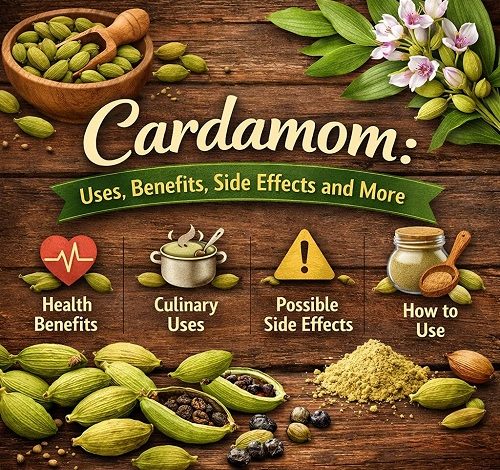
Cardamom is often called the “queen of spices” — and for good reason. With its distinct aroma, warm flavour, and long-standing use in traditional medicine, this small green pod packs a powerful punch. From culinary delights to natural remedies, cardamom has been valued for centuries across cultures. Cardamom Uses, uncover its wide-ranging Cardamom Benefits, and discuss important Cardamom Side Effects you should know before adding it to your daily routine.
What is Cardamom?
Cardamom is a spice made from the seeds of plants belonging to the Elettaria and Amomum genera. It is widely used in South Asian, Middle Eastern, and Scandinavian cuisines. There are two main types:
- Green Cardamom (Elettaria cardamomum): The most common and widely used variety.
- Black Cardamom (Amomum subulatum): Larger pods with a smoky flavour.
Both types are prized not only for their taste but also for their medicinal properties.
Nutritional Profile of Cardamom
Cardamom is rich in essential nutrients and bioactive compounds, including:
- Vitamins: Vitamin C, Vitamin B6
- Minerals: Iron, magnesium, potassium, calcium
- Antioxidants: Flavonoids, polyphenols
- Essential oils: Cineole, terpinene, limonene
These components contribute significantly to the many Cardamom Benefits we’ll discuss below.
Top Cardamom Uses
When it comes to Cardamom Uses, this spice is incredibly versatile. It can be used in cooking, herbal remedies, and even personal care.
1. Culinary Uses
Cardamom is a staple in many dishes:
- Added to tea (especially chai)
- Used in desserts like kheer, cakes, and pastries
- Included in curries and rice dishes like biryani
- Used as a flavour enhancer in coffee
Its sweet and slightly spicy flavour elevates both sweet and savoury recipes.
2. Herbal Remedies
One of the most important Cardamom Uses is in traditional medicine:
- Used to aid digestion
- Helps relieve bloating and gas
- Acts as a natural breath freshener
- Used in Ayurvedic and Unani medicine
3. Oral Health Care
Cardamom seeds are often chewed after meals to:
- Freshen breath
- Reduce bacteria in the mouth
- Improve gum health
4. Aromatherapy
Cardamom essential oil is used in aromatherapy for:
- Stress relief
- Mental clarity
- Relaxation
5. Skincare and Beauty
Cardamom is sometimes used in natural skincare products:
- Helps improve complexion
- May reduce skin irritation
- Used in face masks and oils
Powerful Cardamom Benefits
Let’s dive deeper into the science-backed Cardamom Benefits that make this spice so valuable.
1. Supports Digestive Health
Cardamom is well known for its ability to improve digestion. It helps:
- Stimulate digestive enzymes
- Reduce bloating and gas
- Ease stomach cramps
It is often used as a natural remedy for indigestion and acid reflux.
2. Rich in Antioxidants
One of the key Cardamom Benefits is its high antioxidant content. These compounds help:
- Fight free radicals
- Reduce oxidative stress
- Support overall health
3. May Help Lower Blood Pressure
Studies suggest that cardamom may help reduce blood pressure due to its:
- Diuretic properties
- Ability to improve circulation
Regular use in moderate amounts may support heart health.
4. Improves Oral Health
Cardamom’s antimicrobial properties help:
- Kill harmful bacteria
- Prevent bad breath
- Reduce risk of oral infections
5. Supports Respiratory Health
Cardamom can help with respiratory conditions by:
- Clearing mucus
- Improving airflow to the lungs
- Acting as a natural expectorant
It is often used in traditional remedies for cough and asthma.
6. May Aid Weight Management
Another emerging Cardamom Benefit is its potential role in weight management:
- Boosts metabolism
- Helps reduce fat accumulation
- Supports digestion
7. Enhances Mood and Reduces Stress
Cardamom has calming properties that may help:
- Reduce anxiety
- Improve mood
- Promote relaxation
Its pleasant aroma plays a role in its stress-relieving effects.
8. May Have Anti-Cancer Properties
Some studies suggest that compounds in cardamom may help:
- Inhibit the growth of cancer cells
- Support detoxification
However, more research is needed in this area.
9. Supports Liver Health
Cardamom may help detoxify the body by:
- Supporting liver function
- Promoting toxin elimination
10. Improves Circulation
Cardamom helps improve blood circulation, which can:
- Boost energy levels
- Support heart health
- Enhance overall vitality
How to Use Cardamom Daily
Incorporating cardamom into your routine is easy. Here are some simple ideas:
- Add crushed cardamom pods to tea or coffee
- Sprinkle powdered cardamom into smoothies
- Use in baking recipes
- Add to curries or rice dishes
- Chew seeds after meals
Consistency is key to experiencing the full Cardamom Benefits.
Cardamom Side Effects
While cardamom is generally safe, it’s important to be aware of possible Cardamom Side Effects.
1. Allergic Reactions
Some people may experience:
- Skin rashes
- Itching
- Breathing difficulties (rare)
If you notice any of these symptoms, discontinue use immediately.
2. Gallstones Complications
Cardamom may trigger pain in people with gallstones, as it can stimulate bile flow.
3. Drug Interactions
Cardamom may interact with certain medications, especially:
- Blood thinners
- Blood pressure medications
Always consult a healthcare professional if you are on medication.
4. Excessive Consumption Risks
Overconsumption may lead to:
- Nausea
- Diarrhoea
- Digestive discomfort
Moderation is essential.
Recommended Dosage
There is no official dosage, but general guidelines include:
- Powder: 1–2 grams per day
- Whole pods: 2–3 pods daily
- Tea: 1–2 cups per day
Stick to moderate amounts to avoid unwanted Cardamom Side Effects.
Cardamom in Traditional Medicine
Cardamom has been used for centuries in various healing systems:
Ayurveda
- Used to balance doshas
- Improves digestion and detoxification
Unani Medicine
- Treats respiratory and digestive disorders
Traditional Chinese Medicine
- Used for stomach issues and nausea
These traditional uses highlight the long-standing importance of Cardamom Uses in natural healing.
Cardamom vs Other Spices
Compared to other spices like cinnamon or cloves, cardamom stands out due to:
- Its unique flavour profile
- Strong digestive benefits
- Versatility in both sweet and savoury dishes
Tips for Buying and Storing Cardamom
To get the best quality:
- Choose whole pods instead of pre-ground powder
- Look for bright green pods (for green cardamom)
- Store in an airtight container
- Keep away from heat and moisture
Fresh cardamom retains its flavour and potency much longer.
Who Should Avoid Cardamom?
Although generally safe, certain individuals should be cautious:
- Pregnant or breastfeeding women (consult a doctor)
- People with gallstones
- Individuals with known allergies
Final Thoughts
Cardamom is much more than a flavourful spice — it is a powerful natural remedy with a wide range of health benefits. From improving digestion and supporting heart health to enhancing mood and freshening breath, the list of Cardamom Benefits is impressive.
At the same time, understanding potential Cardamom Side Effects is essential to ensure safe use. When used in moderation, cardamom can be a valuable addition to your daily diet and wellness routine.
Whether you are adding it to your morning tea or using it as part of a natural remedy, the many Cardamom Uses make it a must-have in every kitchen.