Dangerous Flu Variant Spreads as RSV Surges Across California: Health Experts Warn

California is entering the winter respiratory season under a double threat: a newly spreading influenza variant that scientists say is antigenically different from this year’s vaccine, and an early, steep rise in respiratory syncytial virus (RSV) cases that is already hitting children’s hospitals in parts of the state. Public-health officials and infectious-disease experts are urging people — especially parents, older adults and people with chronic conditions — to take extra precautions now to avoid what could be a sharper, earlier wave of severe illness.
A new flu strain on the move
Federal influenza surveillance picked up a new A(H3N2) subclade — referred to in recent reports as “subclade K” — that was first identified by the CDC in August 2025. Laboratory testing shows the subclade has small but meaningful changes in the hemagglutinin protein, which help the virus evade immunity from previous infection or vaccination. That “antigenic drift” means the circulating viruses are not a perfect match for the influenza A(H3N2) component selected for the 2025–26 U.S. vaccine. Public-health groups say the mismatch raises the risk of more vaccine breakthrough infections and an earlier, more intense season than usual.
Health reporters and analysts have traced subclade K’s early impact overseas — notably in Japan, the U.K. and Canada — where it has driven earlier-than-usual waves of influenza activity, and warned that those international trends often foreshadow what will happen in the United States. Local infectious-disease physicians in California are watching closely because even a partially mismatched vaccine usually still reduces severe outcomes like hospitalization and death, but may do less to prevent mild-to-moderate infections.
RSV surging, children especially affected
At the same time, California’s state respiratory-virus reports and recent newspaper coverage document rising RSV activity — particularly among infants and toddlers. Several pediatric clinics and some hospitals have reported increases in RSV-positive tests and visits for bronchiolitis, the lower-respiratory illness RSV can cause in very young children. Public-health officials call the trend “concerning” because hospitals could see pressure on pediatric beds and emergency departments if RSV and a worsening flu season peak together.
RSV can be severe for certain groups: babies under 6 months, premature infants, older adults, and people with weakened immune systems or chronic heart and lung disease. New preventive options — maternal RSV vaccines and long-acting monoclonal antibodies for infants — are now available for some eligible people, and state guidance encourages clinicians and families to consider them where appropriate.
What officials are saying
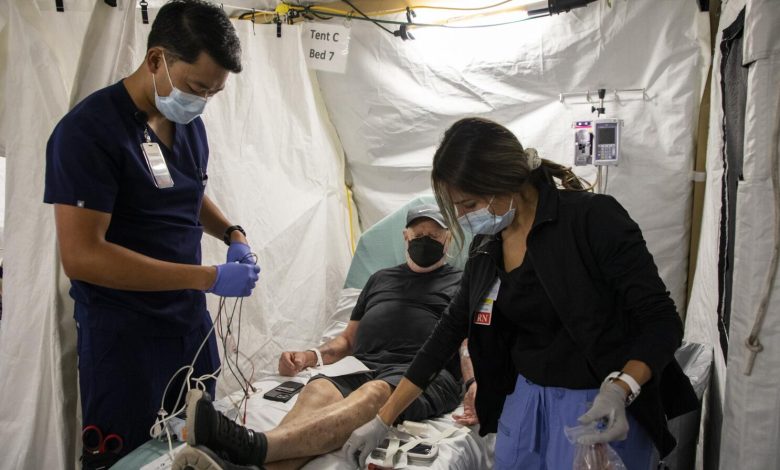
California public-health bulletins note that while current hospitalizations in many regions remain manageable, the trajectory points toward an increase in the coming weeks. Local health officers in areas that have seen early upticks are already asking health facilities to prepare for higher occupancy and reminding clinicians about timely antiviral treatment for high-risk flu patients. Experts emphasize that individual-level prevention will matter: vaccination where recommended, prompt testing and treatment if symptoms develop, masking in crowded indoor spaces, and staying home when sick.
National experts quoted in recent coverage describe subclade K as worrying primarily because of its immune-escape potential and speed of spread — not because its symptoms are fundamentally different. The concern is that more people could become infected, which in turn raises the number of severe cases simply by volume, even if the virus isn’t intrinsically more lethal. Public-health leaders stress that vaccines, even if imperfect, remain the most reliable tool to reduce severe illness and hospitalizations.
Practical steps for the public
Health authorities recommend a layered approach to reducing risk:
- Get vaccinated: Even with a subclade mismatch, the flu vaccine reduces the risk of severe outcomes and hospital stays. Eligible people should also get updated COVID vaccines if they haven’t already, and caregivers of infants should discuss RSV preventive options with pediatricians.
- Seek early treatment if you’re high-risk: Antiviral drugs for influenza (like oseltamivir) are most effective when started early; clinicians are being reminded to prescribe antivirals promptly to older adults, pregnant people, young children and those with chronic illnesses.
- Test and stay home if sick: Rapid home tests for flu and RSV can guide decisions about isolation and care; staying home when ill reduces spread to vulnerable people. (Note: isolation recommendations vary by virus and risk profile.)
- Mask in crowded indoor settings: Respiratory viruses transmit more easily indoors in winter. Masking in high-risk settings — hospitals, care facilities, crowded transit — protects the most vulnerable.
- Practice routine hygiene: Handwashing, improving ventilation at home and avoiding close contact with people who are sick remain simple but effective measures.
Why layering matters
One reason health officials are sounding alarms now is timing: an early RSV season can overlap with an influenza wave driven by a partially mismatched strain, amplifying demand for hospital care and pediatric services. Even if each virus on its own would produce a manageable burden, the combination can create critical pinch points in emergency departments and intensive-care units. Preparing now — from stockpiling antivirals for clinics to reminding families of preventive options — can blunt the peak.
Bottom line
California faces the familiar but consequential winter challenge of respiratory viruses, compounded this year by a flu subclade with antigenic differences and an early RSV surge hitting children first. Vaccination, early treatment for high-risk patients, and commonsense precautions can reduce the toll. Public-health officials urge people to act sooner rather than later: the choices made in the next few weeks will shape how severe this season becomes.