

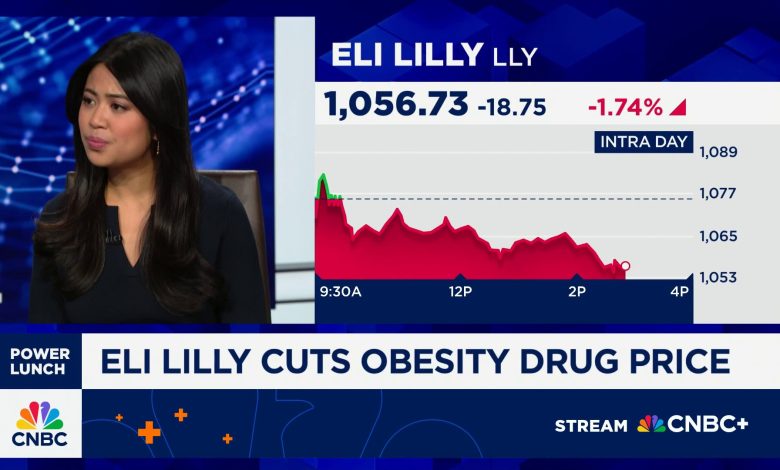
Eli Lilly on Monday announced a fresh price cut for Zepbound — its blockbuster tirzepatide-based weight-loss medicine — lowering the out-of-pocket cash prices on single-dose vials sold through LillyDirect by roughly $50–$100 per monthly supply. The move follows similar self-pay price adjustments by competitors and comes after the company reached an agreement with the U.S. government this fall to expand access to GLP-1 and related obesity medicines. The announcement is already being framed as part strategy and part damage control: strategy to respond to competitors and rising public pressure over drug affordability; damage control because lawmakers, insurers and patients have repeatedly criticized steep out-of-pocket costs for these therapies.
The new price points — what changed
Under the new pricing announced by Lilly, cash-pay patients using LillyDirect can buy single-dose vials of Zepbound at lower price bands: the 2.5 mg starter vial is now listed at $299 per month (down from $349); the 5 mg vial is $399 per month (down from $499); and other approved doses are priced at $449 per month (reduced from $499). Depending on dose and how a patient accesses the drug (via telehealth partners or the company’s direct-to-consumer platform), the monthly cash cost will therefore be $50–$100 lower than the previous self-pay price.
These cuts apply to single-dose vials sold through Lilly’s direct channels and telehealth partners that participate in LillyDirect; they do not automatically translate to every pharmacy or every insurance plan, though the company said the changes signal a broader intent to make treatment more affordable for people paying cash or holding plans with limited coverage.
Why Lilly acted now — the policy and competitive backdrop
Two major forces likely pushed Lilly to move quickly.
First, there is intense competitive pressure in the GLP-1/tirzepatide market. Rival Novo Nordisk — maker of Wegovy and Ozempic — announced its own cash-pay discounts in recent weeks, and the rapid uptake, media coverage and public scrutiny of weight-loss drugs have pushed manufacturers into price signaling and promotional activity. Industry coverage makes clear that Lilly’s price cuts come on the heels of Novo promotions and a wave of price adjustments across the class.
Second, Lilly signed a high-profile agreement with the U.S. administration in early November to expand access to obesity medicines and to accept lower prices for Medicare, Medicaid and cash-pay patients under a new federal purchasing platform. The administration’s push — widely publicized — aims to lower the cost of widely used obesity and diabetes medicines for public programs. Lilly’s updated cash prices for Zepbound align with that political deal and broader pressure for lower out-of-pocket costs.
Put simply: regulators and politicians have turned GLP-1 pricing into a national story, competitors are actively discounting, and both pressures make a price cut sensible from a public relations and market-share protection standpoint.
A little background on Zepbound and tirzepatide
Zepbound (generic: tirzepatide) is Lilly’s dual-agonist therapy that targets two incretin receptors (GIP and GLP-1) to reduce appetite and improve metabolic control. Its clinical trials showed larger average weight loss than many earlier drugs, and it quickly became one of the world’s top-selling medicines after launch — a commercial success that has transformed Lilly’s sales mix and helped the company post record revenues. Tirzepatide is sold in multiple formulations and doses (including pens and vials), and it’s used for both obesity management and, in different formulations, for type-2 diabetes.
That commercial success has also triggered intense debate about affordability: while manufacturers argue the drugs produce broader health benefits (reduced cardiovascular risk and diabetes prevention) that justify pricing, critics say the out-of-pocket costs and uneven insurance coverage mean many people face steep monthly bills or are denied access. The tension between clinical promise and cost has become the defining policy battleground for obesity medicines in 2024–2025.
What this means for patients and access
For people who pay cash or whose insurance doesn’t provide adequate coverage for GLP-1 or tirzepatide therapies, a $50–$100 reduction per month is meaningful — especially over long treatment courses. At $299 per month, a starter vial becomes more affordable for those who previously paid the higher cash price or were priced out entirely. But two important caveats remain:
- Insurance coverage is still the key — many insured patients have faced prior-authorization hurdles, step therapy demands, or cost-sharing that puts treatment out of reach. Lower self-pay prices don’t automatically remove those barriers, although price movement can influence insurer negotiations and formulary positioning over time.
- Not all formulations are equally impacted — Lilly’s cut specifically targeted single-dose vials sold through LillyDirect. Pen devices, multi-dose formats, or prescriptions filled through traditional pharmacies may not see identical price adjustments immediately. That means total patient costs can still vary significantly by how the drug is obtained and whether a patient has coverage.
In short: the announcement is a step toward improved affordability, but it does not fully resolve the broader access puzzle.
Market and investor reaction
Lilly’s price cut is happening when GLP-1 medicines are reshaping growth trajectories across the pharmaceutical sector. Analysts say pricing moves are a double-edged sword: they can preserve or expand patient volume (good for long-term revenue) but can also be read by investors as a sign of margin pressure. In the immediate aftermath of earlier pricing announcements and political deals, Lilly’s stock experienced modest volatility, reflecting investor uncertainty about how lower prices will affect near-term profitability.
That said, the market for obesity medicines remains enormous. Even with lower self-pay price points, the scale of demand — particularly if coverage expands — leaves substantial revenue potential. Several trade reports and market analysts note that incremental price concessions may be a prudent way to blunt regulatory heat while preserving volume growth.
Competitor moves and the pricing arms race
Lilly’s action reflects a wider “pricing arms race” among makers of GLP-1 and related drugs. Novo Nordisk’s recent reductions and promotional pricing programs signaled that manufacturers are competing not just on clinical differentiation but on accessible consumer pricing — especially for self-pay customers. When one large manufacturer changes cash prices, it’s common for others to follow suit to avoid losing direct customers and to manage reputational risk.
The competition also extends to formulation innovation and pipeline launches: companies are racing to develop oral GLP-1s, combination pills, and next-generation agents that promise better efficacy, convenience or safety. Price competition for current injectable formulations is one front; new product introductions and patent timelines are other strategic levers drugmakers will use.
Policy implications — will the government push further?
The price cut comes in the wake of a high-profile federal agreement to broaden access and lower prices for Medicare and Medicaid beneficiaries. The administration’s move to negotiate or set lower Medicare prices for widely used obesity drugs has already changed the political calculus: drugmakers face the prospect of large-scale public program pricing demands if they do not negotiate. Lilly’s price adjustments can therefore be read as a compromise — providing measurable concessions while retaining the drug’s commercial viability in private markets.
For policy watchers, the key question is whether these manufacturer-led price reductions will catalyze longer-term reforms: will insurers broaden coverage, will prior-authorization hurdles be relaxed, and will state Medicaid programs adopt wider access policies? There are early signals that pressure from both the White House and advocacy groups could drive more consistent coverage guidance — but substantial variability across insurers and states is likely to persist for months or years.
Reactions from clinicians and patient advocates
Patient advocates called the price drop “a welcome first step,” but stressed that many patients need durable, predictable coverage rather than one-off cash discounts. Clinicians echoed that sentiment: lower cash prices can help some patients begin therapy, but without streamlined insurance pathways and ongoing coverage, many patients will still face interruptions or unaffordable long-term costs. Coverage continuity matters because obesity treatment is often chronic and requires long-term medication and follow-up care.
Some clinicians also warned about the potential for confusion: different channels (LillyDirect vs. traditional pharmacies) offering different prices can complicate prescribing, and patients may not always be aware of the cheapest path to access a drug. Telehealth partners and pharmacy benefit managers will therefore play an outsize role in helping patients navigate the new pricing landscape.
What to watch next
- Insurance coverage shifts. If insurers broaden coverage or reduce prior-authorization hurdles in response to public pressure or price movement, access could expand significantly. Watch payer bulletins and formulary changes in the coming months.
- Competitor pricing. Expect additional promotional moves from Novo Nordisk and smaller players; price parity or further cuts are possible, especially for cash-pay channels.
- Sales and volume trends. Analysts will be watching whether lower cash prices materially increase self-pay volume or simply shift where patients buy the drug. A sustained increase in prescriptions could offset per-unit revenue declines.
- Regulatory and legislative responses. Federal or state policymakers may seek more structural approaches to affordability, from expanded negotiation authority to new coverage mandates. The political spotlight on GLP-1 pricing makes this a high-probability area for further action.
Bottom line
Eli Lilly’s cut to Zepbound’s self-pay vial prices is a pragmatic response to competitive pressure and political scrutiny. For many patients who pay cash, the reductions will make treatment meaningfully less expensive in the short term. But the move does not by itself solve the larger issues of insurance coverage, ongoing affordability, and equity of access. The overarching story of the GLP-1 era is not just scientific triumph — it’s also a policy and systems challenge: how to ensure that breakthrough medicines are available, affordable, and used safely at scale.
If companies, payers and policymakers continue to iterate — through targeted manufacturer discounts, improved payer coverage policies, and practical government negotiation frameworks — the promise of effective new obesity therapies can translate into broader public-health benefits rather than a regimen that’s affordable only for a privileged few. For now, Lilly’s price reduction is a notable step in that direction, but it is one of several steps still needed to make equitable access a reality.